
Start at the Welding Table
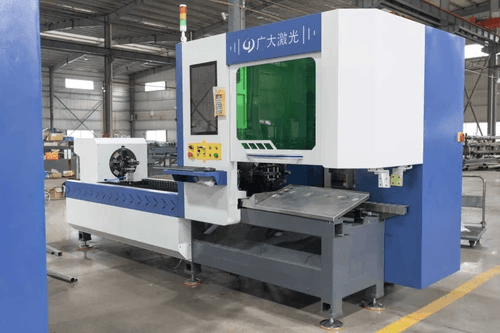
Steel tube laser cutting should not be judged only at the cutting machine. Many of its benefits show up later, at the welding table, fixture station, assembly cell, or final inspection point. A tube part with clean miters, accurate holes, repeatable slots, and locating tabs can reduce fit-up time. A part with poor alignment features can still slow production even if it was cut quickly.
For shops that fabricate frames, brackets, racks, machinery structures, furniture, railings, agricultural equipment, or construction-related assemblies, steel tube laser cutting can change how parts are prepared for welding. Instead of sawing tube to length and then sending it to multiple secondary operations, the laser can produce many features in one controlled program. The result can be a more predictable assembly process.
Kiant Machinery's laser tube cutting machine page is relevant for this type of production discussion. The right equipment conversation should connect tube cutting to downstream fit-up, not only to cutting speed.
Fit-Up Feature 1: Miter and Coping Quality
When steel tubes meet at angles, miter and coping quality can decide how much time welders spend adjusting parts. Manual coping can be slow and inconsistent, especially when tube sizes, angles, and profiles vary. Laser cutting can create programmed profiles that repeat from part to part, helping welders position components more consistently.
TRUMPF notes that tubes and profiles are used across mechanical engineering, system construction, furniture, and other industries, and that laser-cut tubes can open new design possibilities. That point matters because laser cutting is not limited to straight cutoffs. It can help create features that make assembly more intentional.
However, designers should not assume that every theoretical cut will weld perfectly. Material variation, tube seam location, wall thickness, fixture tolerance, and weld gap requirements still matter. Steel tube laser cutting works best when cutting programs are reviewed with welding and assembly needs in mind.
Fit-Up Feature 2: Holes, Slots, and Tabs
Holes and slots can be cut into steel tube before the part reaches assembly. This is useful for bolted structures, wire routing, drainage, locating pins, fixture stops, and fastener access. Tabs and keying features can help operators position tube parts without measuring every joint by hand.
These features can reduce fixture complexity, but they need design discipline. A slot that is too tight may create assembly frustration. A tab that is too weak may bend. A locating hole placed too close to a weld may interfere with strength or access. The machine makes the feature possible; engineering still decides whether the feature is useful.
Kiant's services page supports the idea that buyers need machine selection, setup, training, and long-term support. For steel tube laser cutting, support can help a shop move from simple cutoffs to smarter part features.
Fit-Up Feature 3: Repeatability Across Batches
Repeatability is one of the strongest reasons to evaluate steel tube laser cutting. When tube parts are made with multiple manual steps, each step can introduce small variation. Saw length, drill location, coping shape, and fixture adjustment may all drift. A laser-based workflow can reduce variation by cutting more features from the same digital program.
This is especially useful when the same frame or assembly is produced repeatedly. If parts arrive at the welding table with consistent alignment features, welders can focus on quality and throughput instead of correction. Bystronic's tube laser cutting materials emphasize automated tube processing and production flexibility, which reflects the broader industry move toward repeatable, digitally controlled tube fabrication.
Repeatability also helps inspection. A consistent process makes it easier to identify true process problems. If parts vary randomly because several manual operations are involved, troubleshooting becomes slower.
The Material Side of Steel Tube Cutting

Steel tube laser cutting performance depends on tube material, surface condition, wall thickness, profile shape, length, and straightness. Mild steel, stainless steel, galvanized tube, and coated tube may require different process settings and handling considerations. Tube seam position, mill tolerance, and material cleanliness can also affect cut consistency and fit-up.
Buyers should share real material information with suppliers. Do not only provide nominal outside dimensions. Include wall thickness, material grade, surface coating, tube length, expected tolerance, and whether the tube is round, square, rectangular, oval, or a special profile. If steel tube variation is significant, the machine and process plan should account for it.
Kiant's broader machinery range includes flatbed laser cutting machines for sheet metal and light gauge steel production equipment. For manufacturers that process both sheet and tube or produce building-related steel components, the material conversation may extend beyond one machine.
The Programming Handoff Can Make or Break the Result
Steel tube laser cutting depends on a clean handoff between design, programming, and production. If the engineering file does not define which holes are functional, which slots are for assembly, and which ends require tight fit-up, the programmer may treat all features the same. In practice, some features need closer review because they affect welding sequence, fixture design, or final assembly alignment.
Programming should also account for cut order and part stability. Thin-wall steel tube can move, twist, or vibrate if features are cut in an order that weakens the profile too early. Long parts may need support during cutting. Small parts may require careful unloading so they do not mix or get damaged. The machine's capability matters, but the program decides how that capability is used on each part.
For repeat products, shops should build a controlled part library. Once a tube component has been validated in fit-up and welding, the approved file should be protected from casual edits. This prevents a small programming change from creating fixture problems weeks later. A controlled library also helps new operators and programmers learn faster because they can start from proven examples.
What to Review Before Cutting Production Parts
Before moving steel tube laser cutting into production, run a structured sample review. Cut representative parts, then test them in the real fixture or assembly. Review fit-up, weld access, tab strength, hole alignment, edge quality, burr level, heat marks, part unloading, and operator handling. The sample should prove that the part works downstream, not only that the laser can cut it.
Use the review to refine the design. Sometimes a small change in slot width, tab style, miter shape, or hole position can remove minutes of assembly work. Sometimes a feature that looked clever in CAD creates handling problems on the shop floor. The first sample run should be treated as a production learning step.
BLM Group's broader tube processing positioning is useful here because it shows how tube fabrication can include cutting, bending, end-forming, sawing, and integrated workflows. Steel tube laser cutting is one important step, but the value depends on how it fits the whole process.
Buyer Questions for Steel Tube Laser Equipment
Procurement teams should ask more than machine price. Useful questions include:
- Which steel tube sizes, wall thicknesses, and profiles are most common in our workload?
- Which manual operations should the laser replace?
- How will the system handle loading, rotation, clamping, and unloading?
- What training is needed for programmers and operators?
- How will the cut features support welding and assembly?
- What installation, commissioning, and after-sales support is included?
- How will sample parts be validated before full production?
These questions shift the purchase from a machine-only discussion to a production-result discussion. That is where steel tube laser cutting usually delivers its strongest value.
Sample Parts Should Include the Worst Cases
Many buyers test a new machine with simple sample cuts, but the real proof comes from difficult parts. Include parts with angled miters, closely spaced holes, rectangular profiles, thin-wall steel tube, heavier wall sections, and features that must align with a mating component. If the machine can handle the worst cases consistently, everyday parts are easier to trust.
The sample review should involve the people who will live with the parts. Welders should check gap and access. Assembly teams should check tab fit and hole alignment. Inspectors should confirm which dimensions are critical. Maintenance staff should understand consumables and machine care. Production managers should check whether part unloading and sorting match the expected schedule.
Use the sample run to decide what training is still needed. Some shops need more help with programming. Others need better material staging or fixture changes. Some need to adjust drawings so laser-cut features deliver the intended assembly benefit. A well-run sample process turns steel tube laser cutting from a machine demonstration into a production-readiness exercise.
Where Kiant Machinery Fits
Kiant Machinery should be positioned as a machinery supplier for metal fabricators and production teams evaluating laser tube cutting, flatbed laser cutting, and light gauge steel equipment. The company website highlights support from selection through installation, training, and after-sales service. That matters for steel tube laser cutting because the shop must learn new programming, handling, and design habits to benefit from the equipment.
Buyers can use Kiant's about page for supplier background and the contact page to begin a discussion with real part files, tube sizes, and assembly goals. A supplier conversation anchored in actual parts is more productive than a generic request for a laser cutting quote.
Conclusion
Steel tube laser cutting can improve more than the cut edge. It can reduce fit-up time, simplify fixtures, improve repeatability, and help welders work with cleaner, more predictable parts. To capture those benefits, manufacturers should design around assembly needs, validate sample parts, and choose equipment with loading, programming, training, and support in mind.
For shops ready to connect tube cutting to downstream production, Kiant Machinery's laser tube cutting equipment and service support provide a practical starting point. The best results come when machine selection, part design, and welding workflow are planned together.