
Sheet metal enclosure manufacturing is often described as a sequence of cutting, bending, welding, finishing, and assembly. That description is accurate but incomplete. Most delays and quality disputes do not occur while a part is sitting inside one machine. They occur when responsibility passes from one operation to the next and the incoming part is not truly ready.
A cut blank may meet its flat dimensions but still create trouble at the press brake. A bent panel may look correct but place a door opening out of relationship with its hardware. A finished cabinet may have an attractive coating but fail to protect the equipment because seams, openings, fasteners, or seals were not treated as a complete enclosure system. The practical opportunity is therefore to control the handoffs, not merely to optimize each isolated machine.
An Enclosure Is a Protective System, Not a Collection of Blanks

NEMA defines an electrical enclosure as a cabinet or box that protects electrical or electronic equipment and helps prevent electrical shock. It also explains that enclosure types designate protection for specific environmental conditions. This is an important manufacturing reminder: the final product is judged by the assembled protective function, not by the appearance of one laser-cut panel.
The applicable rating, code, customer specification, and intended environment should be established by qualified designers and compliance personnel before production planning. A fabricator should not assume that selecting a certain material or producing a closed box automatically creates a rated enclosure. Openings, seams, doors, hinges, latches, gaskets, cable entries, coatings, and installation details all contribute to performance.
Manufacturing teams need a controlled package that translates those requirements into part geometry and inspection criteria. The package should identify critical openings, sealing surfaces, bend references, hardware locations, grounding provisions, finish requirements, and assembly checks. This gives every department a shared definition of ready.
Map the Handoffs Before Buying Capacity
A process map should show more than equipment names. It should define what information and part condition must move with every batch. At the cut-to-bend handoff, that may include material identity, grain or finish orientation, part number, revision, bend lines, tooling notes, and an accepted first article. At the bend-to-join handoff, the team may need confirmed angles, flange dimensions, squareness, seam condition, and hardware preparation.
Mapping these requirements often reveals that the apparent cutting bottleneck is actually a release, sorting, or identification bottleneck. Operators wait for revised files, search for matched doors and bodies, remove burrs near a bend, or separate visually similar panels. Adding cutting speed without fixing the handoff can increase work in process and make the queue harder to control.
Kiant's flatbed laser cutting machine range is relevant when the process requires accurate sheet profiles, holes, cutouts, and repeated enclosure blanks. The buyer should still size the cell around release discipline, unloading, part identification, bending capacity, and the acceptable queue between operations.
Cut Geometry Must Anticipate Bending and Hardware
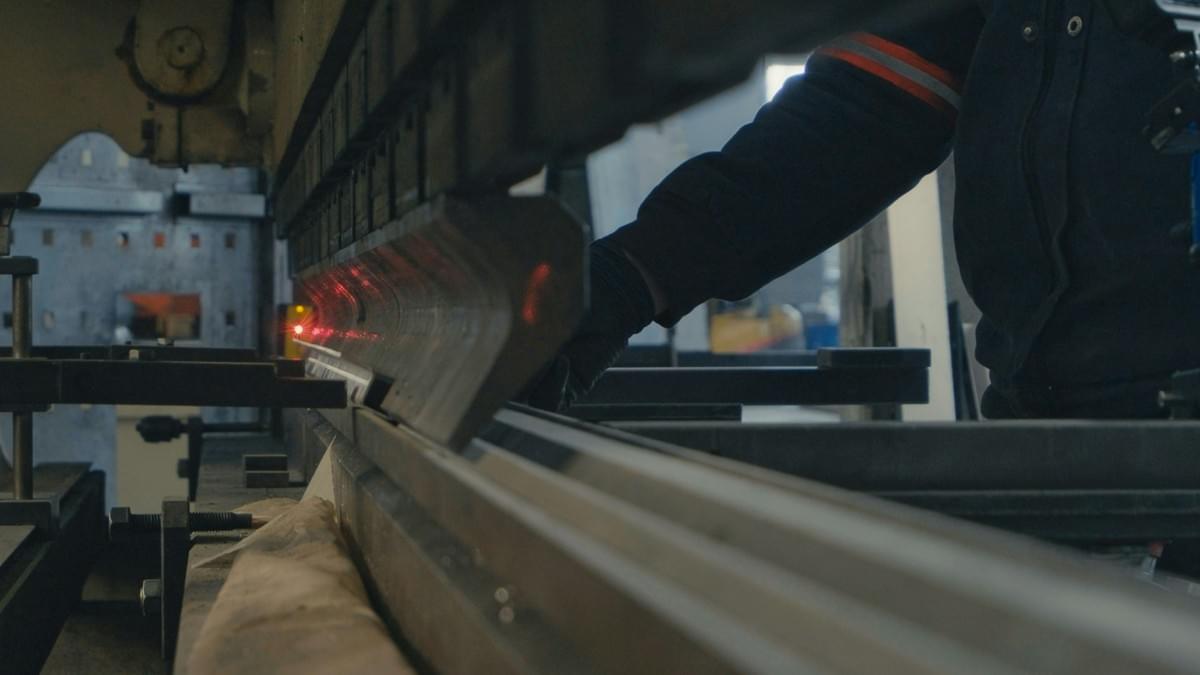
Enclosure blanks are full of relationships. A hole may need to remain aligned after a nearby flange is bent. A door opening must match the door, hinge, latch, and gasket path. A slot may support a mounting rail or ventilation component. Corner reliefs must allow forming without creating an unacceptable gap or sharp projection.
The cutting program should therefore be reviewed together with bend deductions, tooling access, hardware insertion, weld sequence, and final assembly. The goal is not simply to reproduce the CAD outline. It is to produce a blank that becomes the intended three-dimensional part under the shop's real tooling and methods.
First-article inspection should follow the part through at least one complete forming and assembly cycle. If the team approves only the flat blank, it may miss the most important errors. A practical enclosure trial includes a representative door, body, internal mounting plate, hardware pattern, and any high-risk opening. The result should be checked for fit, access, squareness, closure, and the requirements defined by the design authority.
Batch Identity Is a Manufacturing Control
Enclosures frequently contain similar rectangular parts that differ by a small hole pattern, cutout, or revision. Once those parts leave the sheet, visual identification can be difficult. A mixed batch can reach bending or coating and create a costly sorting exercise.
Part identity should be planned before nesting. Options may include job-specific carts, durable travelers, controlled marking methods that are compatible with the product, separated nests, or digital tracking. The correct method depends on the finish, customer requirements, and later operations. What matters is that the identity remains reliable without damaging sealing or visible surfaces.
Matched sets also deserve attention. Doors, bodies, gland plates, and mounting panels may move through different routes but must reunite at assembly. The production plan should define whether they stay together, use synchronized batch IDs, or enter a controlled supermarket. This is especially important when several enclosure families share the same material and finish.
Machine Layout Changes the Handoff
Machine format affects how work enters and leaves the cutting operation. An interchangeable laser cutting machine can be evaluated against loading and unloading overlap, batch volume, and staffing. A single-platform laser cutting machine creates another operating pattern that may suit a different floor plan or production mix. The large enveloping machine page provides a third equipment-format discussion.
The comparison should include safe access, raw-sheet staging, skeleton removal, small-part control, cart positions, travel distance to bending, and space for accepted and quarantined parts. A fast machine placed in a congested cell can produce a poor handoff. Conversely, a layout that makes inspection and routing obvious can improve usable throughput without changing nominal cutting speed.
TRUMPF's technical material on cutting quality also reinforces the importance of process controls that reduce burr and maintain consistency across material variation. For enclosure work, that matters because an edge problem near a bend, gasket path, or hardware feature can spread into several later operations. The acceptance plan should define which edges require correction and which conditions trigger a process review.
Build an Acceptance Pack for the Whole Route
A strong purchasing or commissioning trial uses an acceptance pack rather than a single demonstration part. The pack should contain released drawings, material requirements, representative nests, inspection forms, bend and assembly results, and photographs of agreed quality conditions.
- Include a body blank with multiple bends, corner reliefs, and a representative seam.
- Include a door with hinge, latch, window, display, or ventilation features relevant to the product family.
- Include a mounting panel or gland plate with repeated holes and small cutouts.
- Track every correction required before bending, hardware insertion, joining, finishing, and assembly.
- Verify part identity and revision control from the nest through final fit-up.
- Document operator and maintenance routines needed to sustain the accepted result.
The supplier discussion should include more than the machine arrival. Kiant describes support around machine selection, configuration, training, and maintenance. Those service capabilities should be connected to the plant's acceptance pack, operator roles, preventive checks, and escalation process. Procurement teams can also review Kiant Machinery's company background before agreeing on responsibilities.
Control the Handoff, Then Scale the Output
The most dependable enclosure lines make readiness visible. Cutting releases bend-ready blanks. Bending releases geometry that is ready for joining and hardware. Finishing releases protected surfaces and clear identities. Assembly confirms that doors, panels, seals, and openings work together as designed.
When a plant defines those handoffs first, equipment comparison becomes more concrete. Buyers can ask whether the cutting cell supports the actual material mix, feature range, queue size, inspection method, and floor layout. They can also identify where training or configuration support is essential. A detailed requirement package can then be taken to Kiant Machinery for an application discussion.
Use Failure Codes That Point Back to the Handoff
Improvement stalls when every problem is recorded as rework. The factory needs failure codes that identify the condition and the point where it should have been detected. Examples include burr near bend, incorrect revision, missing cutout, damaged visible face, bend interference, unmatched door and body, hardware pattern conflict, finish contamination, and assembly fit failure.
Each code should lead to a short containment rule. A missing cutout may require isolation of the affected nest and a file review. A recurring bend interference may require a joint review of cut geometry, bend allowance, tooling, and drawing release. A door-body mismatch may require changes to identification or set management. Containment protects active orders while the team identifies the underlying cause.
Trend the codes by product family and handoff. If most issues are detected at assembly but originate in release control, adding more final inspectors will not solve the problem efficiently. If edge correction is concentrated on one material and feature type, a targeted process study is more useful than a broad operator warning.
Plan Maintenance Around Product Risk
Routine maintenance should connect to product quality. Consumable condition, optical or nozzle checks, support condition, extraction performance, lubrication, calibration activities, and other manufacturer-prescribed tasks may affect whether the cell can hold its accepted process. The plant should follow the equipment documentation and record completed work.
High-risk enclosure jobs can trigger additional verification. A batch with dense ventilation patterns, critical gasket openings, visible stainless surfaces, or expensive material may justify a first-piece check after maintenance or a setup change. The rule should be established in advance so that schedule pressure does not decide whether verification occurs.
Maintenance planning also needs a response path. Operators should know which symptoms require a pause, which checks they are authorized to perform, and when to escalate to maintenance or the supplier. This keeps abnormal conditions from traveling downstream as hundreds of apparently finished blanks.
Conclusion
Sheet metal enclosure manufacturing rarely fails because one operation has no capability at all. It fails because a part moves forward with an unresolved condition and the next department absorbs the problem. The remedy is a connected process: translate protective requirements into controlled geometry, approve parts through forming and assembly, preserve identity, and design the cutting cell around real handoffs.
That approach does more than improve quality. It reduces hidden queues, makes supplier conversations more specific, and creates a stronger foundation for scaling enclosure production without scaling confusion.