
Prefab light steel house framing creates value only when the factory sends the site a buildable sequence. Producing a large number of cold-formed members is not the same as producing a house kit. The kit must reflect approved design information, preserve member identity, support panel assembly, fit transport limits, and arrive in an order that helps the erection crew work without searching or improvising.
This distinction changes the way a manufacturer should plan equipment and capacity. The production line is one part of a larger information and material system. If design release, revision control, kitting, quality checks, or site feedback are weak, a fast forming machine can simply create incorrect or poorly sequenced material more quickly.
The Prefab Promise Lives in the Sequence
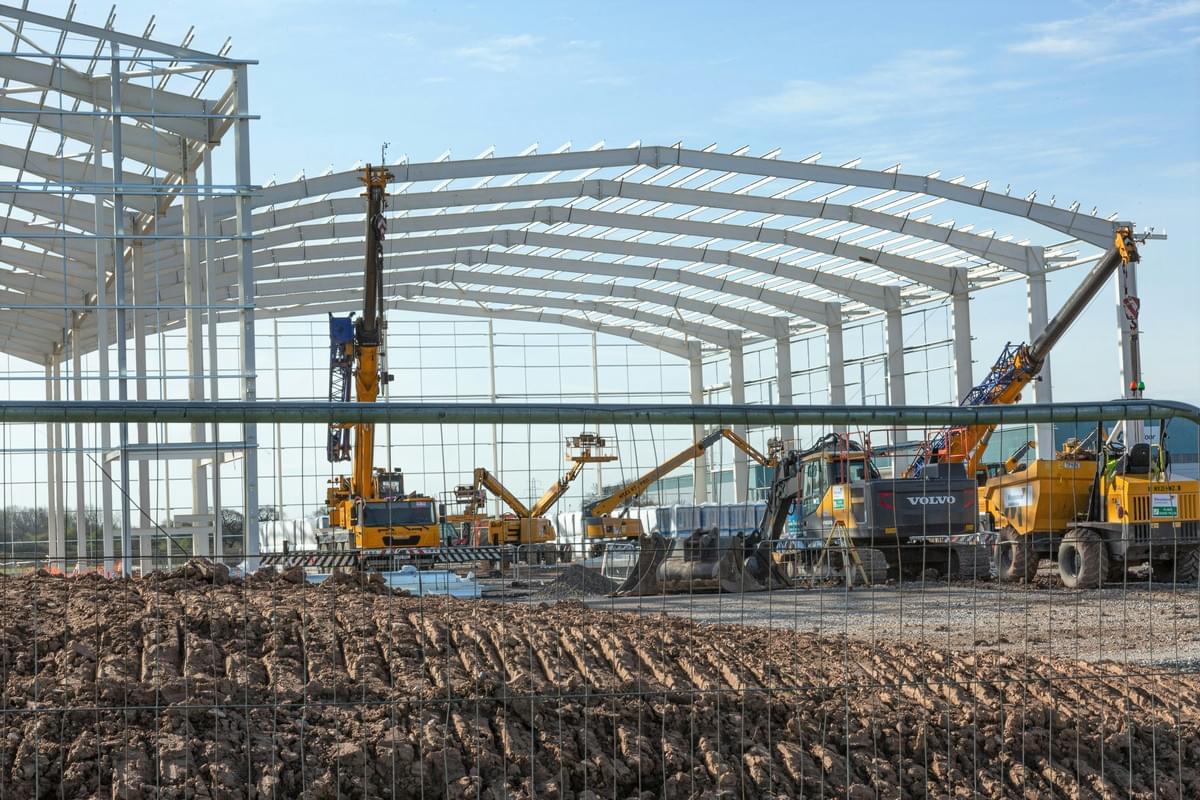
Prefabrication moves work from an uncontrolled site environment into a repeatable factory setting. That shift can improve planning, but it also concentrates responsibility. The factory must know which design revision is approved, which members belong to each wall or roof zone, how openings and service routes are represented, and how the assembly will be handled after it leaves the line.
The production objective should therefore be defined as erectable frames, panels, or clearly organized member kits. Useful output measures include completed wall zones, accepted panels, kits released for shipment, and assemblies installed without missing or incorrect members. Meter count and machine cycles remain important operational data, but they do not describe customer-ready output by themselves.
Kiant's light gauge steel production equipment provides the relevant machinery category for manufacturers building this kind of workflow. The equipment discussion should start with the intended deliverable and then work backward through member types, data release, line balance, and quality control.
Design Release Is the First Production Operation
A production order should enter the factory only after the responsible design team has released the necessary information. Structural design, code compliance, connection design, thermal performance, fire performance, and other building requirements belong to qualified professionals and the applicable project authorities. The machine supplier does not replace those responsibilities.
From a manufacturing standpoint, the release package needs a unique project and revision identity. It should define member geometry, quantities, assembly relationships, openings, connection or fastening information, and any project-specific manufacturing notes. If the factory accepts informal changes outside the controlled release path, it risks mixing revisions within the same kit.
A change-control gate should answer three questions before new data reaches the line: What changed? Which previously produced members or panels are affected? How will obsolete material be isolated? The answers should follow the physical parts, not remain only in email or design software.
Member Production Must Preserve Meaning
Once approved data reaches the line, every member needs to retain its relationship to the building. Length and profile alone are not enough when several walls contain similar studs, tracks, headers, or bracing elements. Identification should connect the member to a project, level, zone, wall, panel, or assembly sequence appropriate to the factory's method.
The exact identification method depends on the equipment and workflow. The core requirement is that operators can verify the part without introducing ambiguous manual steps. If labels, marks, bundle tags, or digital records are used, they should survive the expected handling and remain readable at the point where the information is needed.
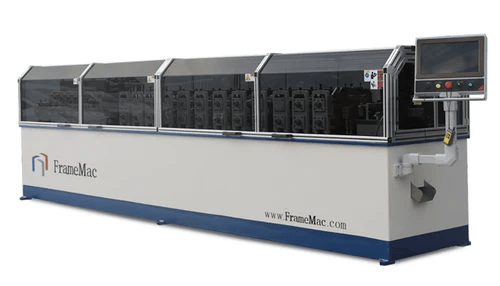
The FrameMac product page can be included in a model-level equipment review, while the category page supports the broader production discussion. Buyers should ask for a demonstration using their own representative member data and should confirm exactly which functions, interfaces, and identification options are included in the proposed configuration rather than assuming capabilities from a model name.
Kitting Converts Members Into a House
Kitting is the bridge between forming and construction. A factory can kit loose members by wall, assemble complete wall panels, prepare roof elements, or use a hybrid approach. Each method changes floor space, labor, transport, lifting, protection, and erection planning.
Loose-member kits require precise bundle logic and clear placement information. Panelized output requires assembly tables, squareness checks, fastening control, opening verification, and a safe method for moving completed panels. Hybrid production may reduce transport volume while keeping difficult assemblies in the factory. The correct choice depends on project scale, shipping distance, site equipment, crew capability, and local construction practice.
Whichever method is chosen, the sequence should support the installer. Bundles that contain every member but hide the first-needed parts at the bottom create avoidable site labor. Panels shipped without a clear placement plan can cause the same problem. The factory should test the sequence with installers and feed their observations back into packing and release rules.
Balance the Line Around the Slowest Deliverable
Production planning should include the forming line, member collection, panel assembly, inspection, repair or quarantine, packing, and dispatch. If the forming line outruns assembly tables, work in process expands. If inspection occurs too late, a repeated error can affect many members before the team reacts. If dispatch space is limited, completed kits can block active production.
A capacity model should use a representative product mix rather than a single simple wall. Include openings, short members, headers, roof or truss components where relevant, revision changes, and the time required to organize the output. Then compare the pace of each step in the chain.
- Track approved project releases waiting for production, not only machine availability.
- Measure accepted wall zones or kits per shift and record the causes of incomplete release.
- Limit work in process between forming, assembly, inspection, and packing.
- Place quality checks early enough to stop repeated errors.
- Plan maintenance and consumable routines around the committed shipping schedule.
AISI's work on cold-formed steel building envelopes is also a reminder that wall and roof assemblies are systems. Its S250 discussion distinguishes wall assemblies, conventional rafter framing, and cold-formed steel truss framing in thermal calculations. Production teams do not perform that engineering by observation on the shop floor, but they must preserve the member arrangement and details issued by the design team.
Commission the Workflow, Not Only the Machine
Commissioning should follow a pilot project from released data to a packed or erected assembly. The pilot needs enough complexity to expose identification, short-part handling, openings, revision control, kitting, and inspection. A simple straight member proves very little about the factory system.
Kiant describes support that includes machinery selection, configuration, training, and maintenance. The service discussion should define operator roles, data preparation responsibilities, startup checks, maintenance tasks, and the process for resolving questions. Procurement teams can review Kiant's company information and agree on deliverables before the project schedule becomes compressed.
After the pilot, the factory should retain an acceptance record: the data revision, produced member list, inspection results, panel or kit photographs, discrepancies, corrective actions, and approved operating method. When the intended house types and factory constraints are ready for review, manufacturers can contact Kiant Machinery with a specific application package.
Make Dispatch Readiness a Formal Gate
A kit should not be considered complete merely because its members have been produced. Dispatch readiness needs a formal gate that confirms the approved project and revision, the expected member or panel count, quarantine status, bundle identity, protection, lifting or handling method, placement information, and shipping sequence.
The gate should also account for partial shipments. If a project must be split across trucks or dates, the factory should define which construction zones are complete and what dependencies remain. Sending an incomplete wall sequence without clear status can move factory uncertainty to the site, where correction is usually slower and more expensive.
Packaging design should be tested. Bundles must remain stable during expected handling and transport, yet the erection crew should be able to access the first-needed material without dismantling the entire shipment. Panel racks, dunnage, edge protection, weather protection, and restraint methods should match the product and logistics plan. Qualified personnel must establish safe lifting and transport procedures.
Use Site Installation as the Final Process Trial
The first pilot should continue through installation whenever possible. The factory can learn whether labels remain readable, bundles arrive in the right order, wall or roof zones are complete, openings align with coordinated work, and crews understand placement information. These observations are not a substitute for formal inspection, but they expose production assumptions that may not be visible inside the plant.
Capture feedback in a structured record. Note missing, damaged, incorrect, or difficult-to-find items; identify the project and assembly; classify the cause; and assign corrective action. Positive observations are useful too. If a certain bundle sequence or panel rack reduces handling, standardize it for suitable future projects.
This closed loop turns prefab production into a learning system. Design, factory, logistics, and installation teams can improve the next release together instead of repeating the same handoff problems under a new project number.
Keep the feedback connected to the original production record. When the team can trace a site observation back to a wall, member set, revision, material record, inspection, and packing decision, corrective action becomes specific. Without that traceability, every project starts another debate about where the problem began.
Conclusion
Prefab light steel house framing is not a race to produce the greatest number of profiles. It is a controlled sequence that converts approved design information into identifiable members, buildable assemblies, organized shipments, and predictable site work.
Manufacturers who plan from the erection sequence backward can make better decisions about equipment, layout, staffing, quality gates, and support. The machine remains essential, but the deliverable is the house frame that the next team can build correctly.