
Light gauge steel wall panel production becomes difficult when the line is managed as a collection of individual studs and tracks. A completed wall panel is an assembly with a specific revision, geometry, opening pattern, member arrangement, connection plan, and destination in the building. If any of those relationships are lost, the factory may still report high output while assembly and installation absorb the errors.
The following six control points give production managers a practical way to evaluate the entire route. They do not replace structural design, code review, or project engineering. Instead, they help the factory preserve approved information and turn formed members into panels that are ready for the next operation.
Control Point 1: Freeze the Production Revision
The first control point sits before the coil reaches the machine. Every wall panel released to production needs a unique project, level, wall, and revision identity. The factory should know who is authorized to release changes and what happens when a revision arrives after members have already been produced.
A revision freeze does not mean design can never change. It means changes enter through a controlled path. The team identifies affected panels, stops or quarantines obsolete work, updates member data, and communicates the new status to forming, assembly, quality, and shipping. Without that process, two correct revisions can become one incorrect mixed panel.
Use a visible release queue so that machine availability cannot override design status. A line should never produce unapproved data simply because it is waiting for work.
Control Point 2: Match Material to the Released Job

Coil identity and condition must remain linked to the production order. Material grade, coating, thickness, and other specified properties belong to the approved manufacturing package. Operators should verify the material before setup and record the lot or coil information required by the factory's quality system.
Storage and handling matter as well. Coil damage, contamination, or uncontrolled substitution can create problems that are not visible in a machine cycle count. The incoming-material check should define acceptance, quarantine, and escalation rules. Qualified engineering or quality personnel should decide whether a deviation is acceptable; the operator should not be forced to improvise.
Kiant's light gauge steel production category provides the starting point for equipment discussions, but the proposed line must be reviewed against the actual material and member requirements issued for the target projects.
Control Point 3: Verify Features Before Volume Builds
A member can have the correct overall length and still be wrong for the panel. Holes, service openings, notches, connection features, end conditions, and orientation may control whether the member can be assembled and installed as designed. The first-piece check should therefore compare the complete member to released data.
Choose first pieces that expose risk. A simple full-height stud may not test the details found around windows, doors, headers, bracing, corners, or service zones. The inspection plan should include those higher-complexity members and should define which dimensions or features are critical.
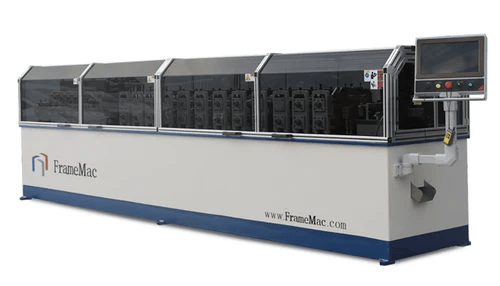
If the factory evaluates the FrameMac machine page, it should confirm the exact proposed functions with representative project data. Product names and broad categories are not substitutes for an application trial.
Control Point 4: Collect Members in Panel Order
The space between forming and panel assembly is a control zone, not an uncontrolled buffer. Members should be grouped in a way that makes the next assembly obvious. If operators must search through mixed bundles, the factory loses time and increases the chance of installing a similar-looking member in the wrong location.
Panel-order collection can use dedicated carts, sequenced racks, bundle positions, or another method suited to the line. The key is to prevent identity from separating from the physical member. Short pieces and repeated profiles need particular attention because they are easy to misplace.
Work-in-process limits help. When too many incomplete panels accumulate, missing parts and revision questions become harder to resolve. A controlled buffer should make shortages, quarantines, and completed sets visually distinct.
Control Point 5: Inspect the Panel as an Assembly
Panel assembly is where cumulative error becomes visible. The table or fixture should support squareness, overall dimensions, opening geometry, member position, and the fastening or joining method defined by the project. Inspection should occur before sheathing or later work hides important details.
A practical panel record may include wall identity, revision, overall dimensions, diagonals, opening checks, critical member positions, connection verification, inspector status, and photographs where useful. The inspection depth should reflect the project and quality plan.
AISI's S250 discussion shows that cold-formed steel wall and roof assemblies are considered as systems in thermal analysis, including different framing shapes, spacing, steel thickness, and insulation arrangements. Manufacturing personnel should not redesign those assemblies, but they must maintain the issued arrangement so that the completed building can follow the design intent.
Control Point 6: Close the Loop With Assembly and Site Feedback
The final control point extends beyond the factory. Panel assemblers and site crews see whether identification, placement diagrams, lifting points, bundle sequence, and connection access work in practice. Their feedback should return through a structured process rather than remain as informal complaints.
Classify the feedback. A missing member may be a production issue, a packing issue, or a site-handling issue. An opening conflict may come from design coordination, revision control, assembly, or installation. Correct classification prevents the factory from changing a stable process in response to the wrong cause.
Current SFIA/AISI work on a cold-formed steel code of standard practice highlights communication among wall-panel detailers, manufacturers, and installers, as well as clear panel identification and placement information. That division of responsibility is directly relevant to factory feedback loops.
Turn the Six Controls Into an Equipment Requirement
The six controls create a better machinery specification. Buyers can define the incoming data, material range, member families, identification method, high-risk features, expected panel sequence, staffing, quality records, and desired output. They can then compare the production equipment and factory layout against those requirements.
Kiant's training and support services should be discussed in terms of these operating controls. Training should cover the proposed workflow, first-piece verification, operator responsibilities, routine checks, maintenance, and issue escalation. Procurement teams can review Kiant Machinery's background and use a pilot panel to confirm the working method.
When the project package is mature, a manufacturer can send Kiant the representative wall-panel requirements for a more focused equipment and configuration discussion.
Run a Weekly Control Review With Evidence
The six controls become useful when the factory reviews them with current evidence. A short weekly meeting can examine revision exceptions, material quarantines, first-piece failures, incomplete panel sets, assembly defects, and site feedback. The purpose is not to create a long presentation. It is to decide which abnormal conditions threaten active or upcoming work.
Use a small set of measures: released panels waiting for production, members produced against obsolete data, material holds, first-piece acceptance rate, incomplete kits, panel rework hours, and site-reported shortages or fit issues. Break the measures down by project or panel family so that one difficult job does not hide inside a plant-wide average.
Every repeated issue should have an owner and a due date. If members are difficult to identify, the action may involve data preparation, marking, collection carts, or assembly instructions. If openings drift, the team may need to review released geometry, fixture setup, or inspection frequency. If site crews receive panels out of sequence, shipping and placement information need attention.
Protect the Control Plan During Schedule Pressure
Busy periods test whether the system is real. Factories may be tempted to release incomplete data, combine similar member sets, skip a first-panel check, or ship around a quarantine. These shortcuts can make today's output number look better while creating tomorrow's installation delay.
Define non-negotiable gates and who can authorize an exception. The rule might require approved data before forming, verified material before setup, accepted first pieces before volume, complete identity before collection, and panel acceptance before packing. Exceptions should be documented with risk, responsibility, and corrective action.
Supervisors should also protect time for preventive maintenance and training. A stable wall-panel line depends on operators recognizing abnormal output and responding consistently. Production discipline is most valuable when demand is high enough to make shortcuts attractive.
Calibrate the Tools That Decide Panel Acceptance
Panel quality depends on the reliability of the checks used to accept it. Tape measures, squares, gauges, fixtures, stops, and digital measuring tools should be identified, maintained, and verified according to the factory's quality system. An inspection record has little value if different teams use inconsistent references or damaged tools.
Define the datum and method for each critical check. Overall width measured from different edges, diagonals taken around protruding details, or opening locations referenced from inconsistent points can create arguments even when everyone is working carefully. The production package should show what to measure, where to measure it, and when the check occurs.
Fixtures also need status control. A framing table or stop arrangement may be correct for one panel family and wrong for the next. Mark the setup identity, verify it before the first panel, and recheck after an impact, repair, or adjustment. If operators use temporary blocks or shims, those changes should be authorized and recorded rather than becoming invisible permanent practice.
Measurement-system reviews should focus on decisions. If two trained inspectors repeatedly disagree near an acceptance limit, the team may need a clearer method, a more suitable tool, or a revised fixture check. Resolving that uncertainty protects both quality and output because accepted panels do not return later for avoidable reinspection.
Conclusion
Light gauge steel wall panel production stays on sequence when the factory controls revision, material, member features, collection order, panel inspection, and field feedback as one connected system. None of these controls is complicated in isolation, but skipping one can undermine the rest.
The most useful output measure is not how many isolated members leave the former. It is how many correct, identified, accepted panels move forward without creating avoidable work for assembly or installation.