
Why Gym-Equipment Frames Create Hidden Workflow Drag
Fitness equipment tube fabrication often combines repeated product families with enough variation to make part handling messy. Frames, supports, braces, handles, and machine arms may all look similar enough to confuse staging while still requiring exact preparation to fit quickly. As a result, hidden delays appear not only in cutting but also in sorting, kitting, matching, and assembly readiness.
That is why shops in this segment should think about workflow before thinking about machine speed. If the parts arrive faster but still create confusion and correction later, the line has not improved as much as it appears.
Map the Frame Family Mix First
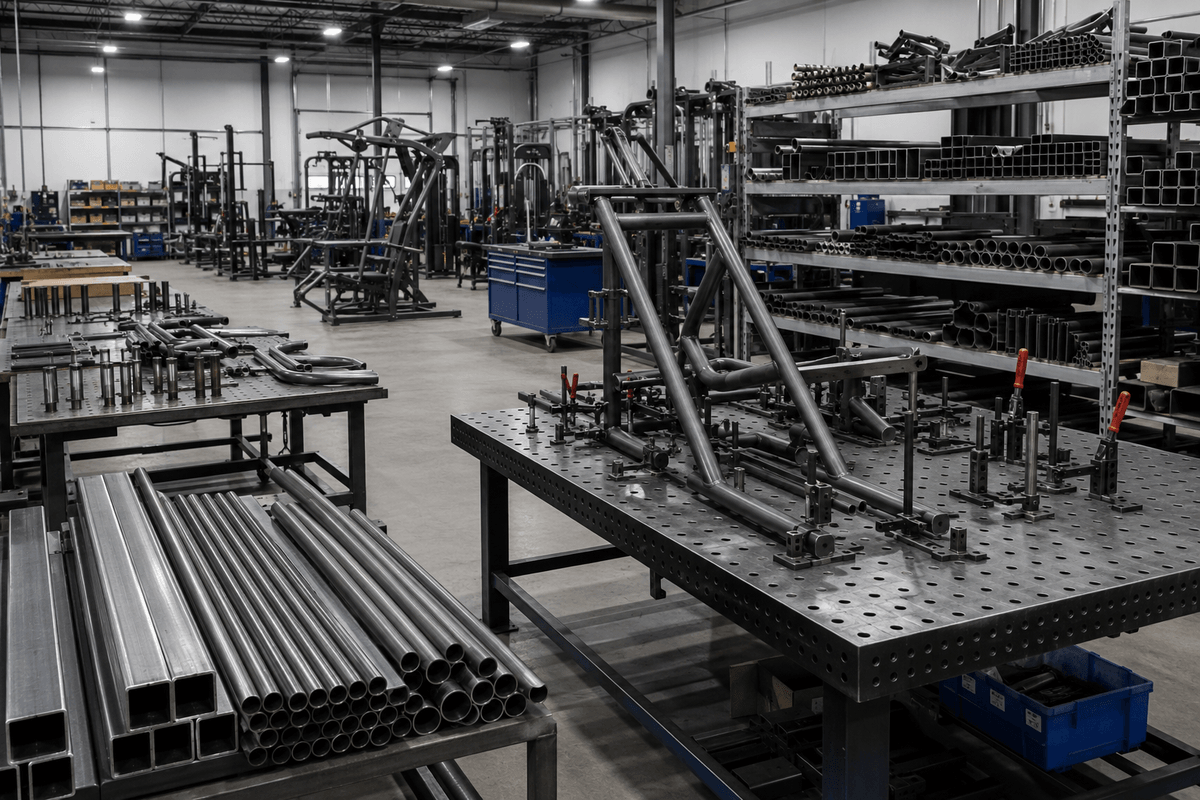
A buyer should begin by separating high-volume repeat models from frequent custom or low-volume variants. Some factories mainly produce repeated frame sets for cardio and strength equipment. Others switch constantly between model families, which creates heavier demands on part identification and downstream staging. These differences change what the ideal cutting workflow should accomplish.
Kiant's laser tube cutting machine category is the right core internal link because it matches the tube-processing side of the problem directly. When the article needs more concrete commercial anchors, model pages such as G90 Store lightweight machine and M12Y Store lightweight machine fit naturally.
What the Best Workflow Improvement Actually Looks Like
In this kind of production, improvement usually looks like cleaner kits, fewer unidentified parts, less corrective work before welding, and smoother handoff to finishing or coating. That means a good machinery decision should be evaluated through the whole production chain. Cutting is important, but it is only one piece of the result.
For factories that also produce sheet-metal brackets, covers, or support plates, Kiant's flatbed laser cutting machines page is also relevant because fitness equipment manufacturing often spans both tube and sheet processing.
Questions a Production Team Should Answer Together
- Which frame families create the most downstream sorting difficulty today?
- How much assembly delay comes from part mismatch rather than slow cutting?
- Will the plant need process support during installation and early production ramp-up?
- How will mixed tube and sheet work be coordinated if both affect the same product families?
- Which departments should evaluate the change together: cutting, welding, finishing, and production planning?
Support and Transition Planning Matter in This Segment
Fitness equipment fabrication lines can become messy quickly if the transition to a new workflow is not organized well. Kiant's services page is a strong commercial link for this reason. It helps the article talk about setup, training, and after-sales support without forcing repetitive branding into a separate H2.
The contact page is also useful when the reader is ready to compare frame families, production volume, and layout constraints directly.
Conclusion
Fitness equipment tube fabrication improves most when the shop reduces sorting confusion and correction work across repeated frame families. Buyers who evaluate machinery through assembly readiness and workflow stability tend to make more practical decisions than buyers who chase speed headlines alone.