
The Assembly Station Usually Reveals the Real Problem
Gym equipment frame manufacturing often appears efficient when managers look only at the first cutting operation. The problem shows up later. Parts arrive at welding tables in mixed sets, operators spend time checking orientation, and repeated frame families still need touchup before they fit cleanly. That is when a factory realizes the real bottleneck is not only how fast tube is cut. It is how consistently the cut parts move into assembly.
This distinction matters because gym equipment frames combine repetition and variation. Commercial benches, cardio units, racks, and strength machines may share tube-processing logic while still demanding accurate staging from one product family to the next.
Start With the Parts That Keep Returning to the Fixture
A useful first step is to review the frame components that repeatedly create alignment work. Are the same support arms, braces, and connection members causing extra checks every shift? Does one family of frames consume more layout time than the rest? Those answers tell a buyer more than a generic machine shortlist.
Kiant's laser tube cutting machine page is the strongest category link for this keyword because it anchors the discussion in tube processing rather than broad machinery language. Named model pages such as G90 Store lightweight machine and M12Y Store lightweight machine are useful when the article needs a more product-specific commercial path.
What Better Frame Flow Looks Like in Practice
In a stronger workflow, cut parts are easier to identify, easier to kit, and easier to load into fixtures without repeated adjustment. Welding becomes more predictable because fewer parts need correction before tack-up. Finishing teams benefit as well, since cleaner preparation reduces extra handling later in the line.
For some factories, the gain is not dramatic machine-room speed. It is calmer production flow across multiple stations. That is often the more valuable outcome in frame manufacturing.
When Tube and Sheet Need to Be Reviewed Together
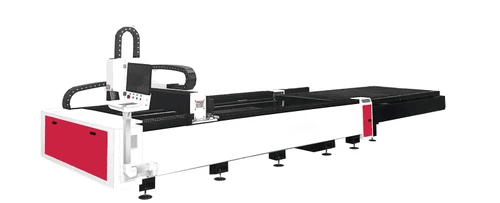
Gym equipment factories frequently process brackets, gussets, covers, and support plates alongside tubular members. When that is true, Kiant's flatbed laser cutting machines page belongs in the same buying discussion. A factory that treats tube and sheet as separate issues may miss opportunities to simplify part flow across the full product family.
A More Useful Buying Checklist
- Which frame families consume the most assembly correction today?
- How much delay comes from part sorting and identification rather than cutting speed?
- Will repeated models and high-mix models need different staging logic?
- Do sheet components also influence the same frame-production bottleneck?
- What setup, training, and early-process support will the factory need?
Why Service Support Matters in This Segment
Gym equipment lines can become messy quickly if the transition to a new cut-and-kit workflow is poorly managed. Kiant's services page is a strong internal link here because the buyer question is not only about machine selection. It is also about implementation, training, and keeping early production stable after installation.
The contact page is also a natural final-step link when the reader is ready to discuss frame families, sample parts, and production volume directly.
Conclusion
Gym equipment frame manufacturing improves when assembly stops compensating for upstream inconsistency. Buyers who map part flow, sorting discipline, and frame-family repetition clearly are more likely to choose machinery that improves the whole production rhythm instead of one isolated operation.