
Fiber laser cutting machine cost per part is not a number that sits inside a brochure. It is created by the shop's material mix, part geometry, nesting discipline, assist gas choice, loading and unloading rhythm, consumable use, scrap behavior, operator skill, maintenance habits, and downstream finishing requirements. Two factories can buy similar machine formats and end up with very different part costs because their work moves through the shop differently.
A useful cost-per-part calculation is therefore a ledger, not a slogan. It should collect the costs that production managers can verify, then connect those costs to actual job families. The goal is not to predict every future job perfectly. The goal is to prevent purchasing decisions from being driven only by machine price, maximum power, or a sample that does not represent daily work.
Start With Job Families, Not a Single Average
An average part cost can hide the work that matters. A shop cutting thin decorative panels, medium-thickness brackets, stainless kitchen parts, and mixed prototype jobs should not average them into one fictional part. Each family uses machine time, gas, operator attention, and finishing labor differently.
Group parts by material, thickness range, edge requirement, geometry complexity, batch size, unloading difficulty, and downstream process. Then choose representative nests from real orders. A practical evaluation of flatbed laser cutting machines starts to make sense when the buyer can say which job family is being improved.
This also protects the discussion from unrealistic comparison. A high-mix fabrication shop may value changeover discipline and programming flow more than a narrow cost target for one simple part. A repeated-panel producer may care more about unattended rhythm, unloading, and reliable edge quality across long batches.
The Ledger Has More Lines Than Machine Time

Machine time is visible, but it is only one line in the ledger. A serious cost review should include sheet cost, scrap value, yield loss, pierce count, cutting time, assist gas, electricity, consumables, operator time, loading and unloading labor, inspection, deburring, part sorting, rejected parts, and downtime events that interrupt scheduled output.
Some of these values will be estimates at the buying stage, but the estimate should still be tied to evidence. Use current job travelers, material invoices, nesting reports, finishing labor logs, and defect records. When the new machine is commissioned, replace assumptions with measured values.
The most useful cost-per-part ledger is updated after the first production month. If secondary work drops for one part family but loading delays rise for another, the ledger reveals where the next improvement should happen. It also gives managers a practical way to compare process changes without claiming guaranteed payback.
Scrap and Yield Need Their Own Evidence
Scrap is often treated as one percentage, but laser cutting creates different types of loss. There is unavoidable skeleton material, avoidable remnant waste, damaged parts, parts cut from the wrong material, parts rejected after edge inspection, and parts lost during sorting. These losses do not have the same cause, so they should not be buried inside one broad allowance.
A better ledger separates planned yield from avoidable loss. Planned yield comes from sheet size, nest layout, part geometry, and remnant policy. Avoidable loss comes from unstable process conditions, wrong files, poor material identification, handling damage, or downstream rejection. The first type is improved through design and nesting discipline. The second type is improved through workflow control and operator feedback.
For a buyer, this distinction changes the equipment conversation. If the current shop loses money through handling damage and mixed parts, a faster machine alone will not solve the problem. If the main loss is poor yield on repeated sheet families, nesting strategy, table format, and job planning deserve more attention during evaluation.
Loading and Unloading Can Rewrite the Cost
Many buyers focus on cutting speed and forget that finished parts must leave the table in a controlled way. Delicate parts, heavy plates, film-covered sheets, cosmetic stainless, and nested kits can all create unloading work. If operators spend time sorting small parts, protecting surfaces, or finding missing pieces, the cost appears downstream even though the bottleneck began at the cutting cell.
Machine format should be matched to this handling pattern. Kiant's Interchangeable Laser Cutting Machine can enter reviews focused on table exchange and production rhythm. The Single Platform Laser Cutting Machine may enter a different kind of discussion where floor space, batch size, or simpler handling is more important.
There is no universal answer. A factory should compare the time saved during cutting with the time required to prepare sheets, clear parts, protect surfaces, and feed the next operation. The cost per part falls only when the whole cell moves better.
Secondary Work Is Often the Quiet Cost Center
Deburring, grinding, tapping, straightening, sorting, and reinspection can make a part expensive even when the laser program ran quickly. These steps are easy to normalize because they happen after cutting, but they deserve a clear place in the ledger. A lower edge-quality requirement and a cosmetic visible part should not be costed the same way.
TRUMPF's laser-cutting application materials describe laser cutting as a process affected by parameters, material behavior, and production conditions. The practical lesson for buyers is that edge quality should be measured against the next operation, not judged by a generic photograph. If the part goes directly to bending, welding, or finishing, the cutting standard must support that route.
A good sample trial should therefore include parts with small holes, long contours, corners, narrow bridges, and real downstream requirements. Measure how much correction is needed before the next department accepts the parts. That labor belongs in the cost per part.
Support and Maintenance Belong in the Same Calculation
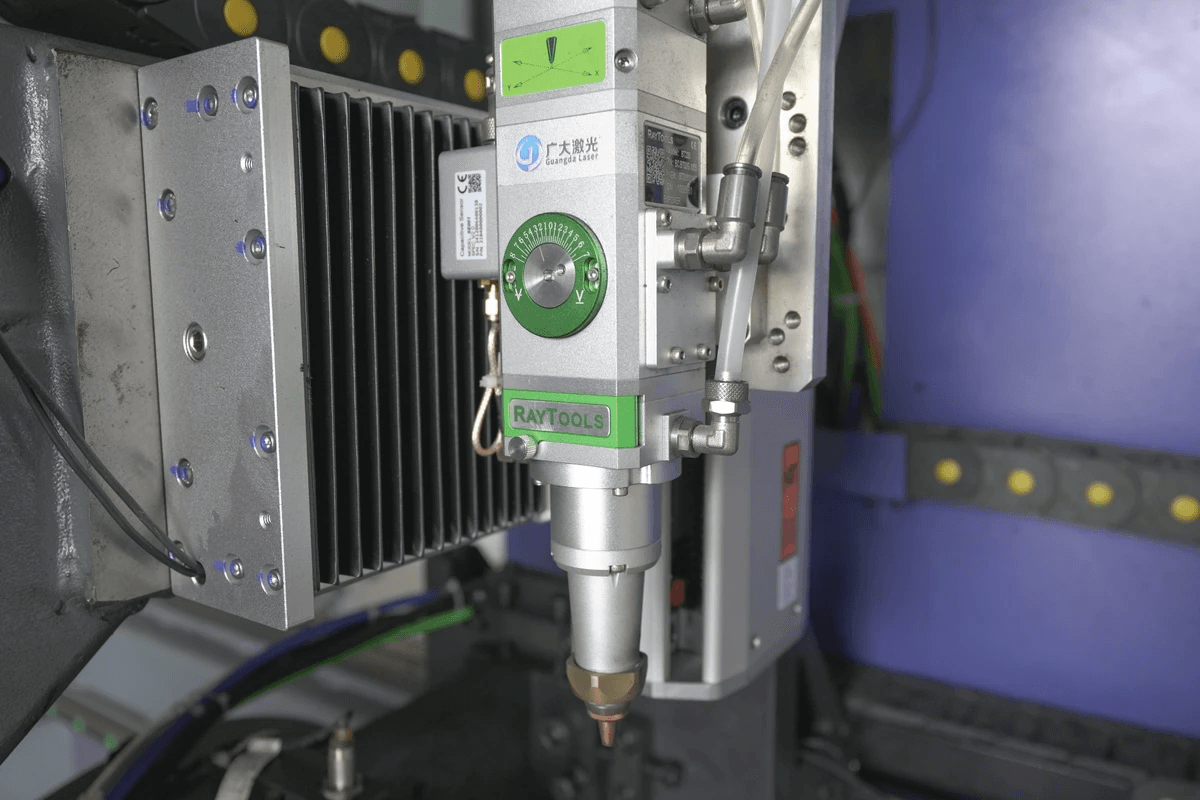
Downtime is not only an availability issue. It can change quoted delivery dates, overtime patterns, operator confidence, and scrap behavior after restart. A cost ledger should include planned maintenance time, consumable routines, operator training, and the support process for troubleshooting.
The ledger should ask simple questions. Who trains the operators? Who defines preventive checks? How are consumable issues diagnosed? What sample parts will be used at acceptance? Who owns the data needed to compare expected and measured part cost?
Acceptance Should Compare Routes, Not Only Machines
The strongest acceptance trial compares the current route with the proposed route for the same job family. Cut the same representative parts, then measure the time and correction needed until those parts are accepted by the next department. This avoids the common trap of comparing only laser runtime while ignoring sorting, deburring, material movement, and queue behavior.
The route comparison should include people who own the downstream steps. Press brake operators, welders, finishing staff, and quality inspectors often see cost changes that the laser operator does not. Their feedback helps determine whether the new process produces parts that are easier to use or merely faster to create.
After installation, the same route comparison can become the first improvement cycle. The factory can keep the original expectation, measured first-week data, and measured first-month data in one ledger. That record gives managers a practical basis for adjusting programs, training, carts, inspection points, or maintenance routines without turning every discussion into opinion.
Quote Comparison Should Use the Same Evidence Pack
When several equipment offers are compared, each supplier should be evaluated against the same evidence pack. That pack can include representative drawings, material notes, surface requirements, expected batch sizes, current downstream corrections, and the buyer's preferred acceptance method. If each quote is based on a different part mix, the cost-per-part discussion becomes too easy to misread.
The buyer should also separate one-time project costs from recurring part costs. Foundation or layout work, installation, training, initial tooling, and commissioning support may belong in the investment review, while gas, consumables, labor, scrap, and secondary work belong in ongoing part cost. Keeping those categories separate makes the decision cleaner for both procurement and production managers.
A Practical Cost-Per-Part Worksheet
- Choose three to five real job families instead of relying on one average part.
- Record sheet cost, yield, pierce count, cutting time, gas use, consumables, labor, scrap, and secondary work for each family.
- Measure loading, unloading, sorting, and inspection time separately from laser runtime.
- Run sample parts through the next operation before accepting the cutting result.
- Update the ledger after commissioning so assumptions are replaced by measured production evidence.
- Use the contact route when the buyer is ready to discuss representative parts, workflow fit, and support scope.
Conclusion
Fiber laser cutting machine cost per part becomes useful only when it reflects the real factory. Buyers should build the calculation around job families, not headline price. Material yield, handling, gas, secondary work, maintenance, and training all belong in the same ledger. When the calculation follows the part from sheet to accepted output, the machine discussion becomes more practical and much harder to distort. That discipline gives both procurement and production a shared language for the decision.