
An exchange table fiber laser cutting machine can change the pace of a sheet metal shop, but only when the rest of the cell is ready for that pace. The table exchange itself is not the complete productivity story. Operators still need to stage sheets, remove parts, protect surfaces, manage scrap, inspect output, and move accepted parts toward bending, welding, finishing, or packing.
The best buying conversation begins with shop rhythm. How long does it take to prepare the next sheet? How long does unloading really require? Which parts are hard to identify? Which materials need careful surface protection? Which downstream department becomes crowded when cutting output rises? These questions help decide whether an exchange table solves a real bottleneck or merely moves the bottleneck to another aisle.
Measure the Dead Time Before Naming the Solution
The first diagnostic is simple: record what happens between the end of one cut and the start of the next effective cut. Include operator walking time, forklift waiting, sheet preparation, film handling, part removal, skeleton disposal, nozzle checks, program confirmation, and quality review. The measured delay will usually be more useful than an estimate.
If the cutting head is frequently idle while the table is being cleared, an exchange-table format may deserve serious review. Kiant's Interchangeable Laser Cutting Machine is a natural product reference for this discussion because it connects the buyer's question to table exchange and sheet processing workflow.
If the delay comes from missing programs, unstable material supply, downstream congestion, or slow inspection approval, the solution may require process changes before machine format changes. A new table arrangement should amplify a disciplined process, not hide a disorganized one.
The Outside Table Is a Production Zone
An exchange table creates an outside work zone where operators load new sheets or unload finished nests while cutting continues elsewhere. That zone needs enough space, lighting, lifting access, scrap control, part protection, and clear rules. Treating it as spare floor space is a common planning error.
Parts should be removed in a way that matches the next operation. Bend-ready panels need identity and orientation. Cosmetic sheets need surface protection. Small parts need containers that prevent loss. Heavy parts may need lifting plans. If the outside table is chaotic, the shop can produce more parts and more confusion at the same time.
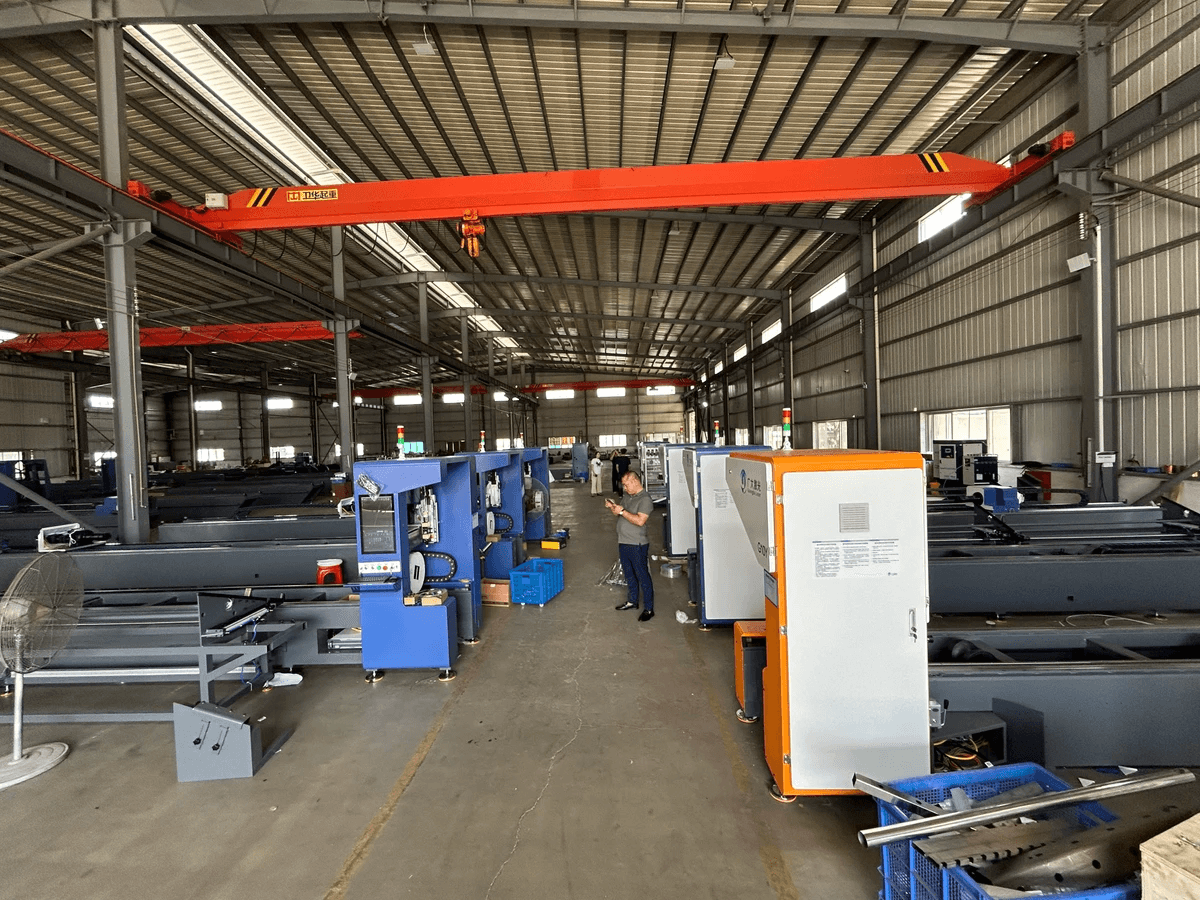
For buyers comparing flatbed laser cutting equipment, the layout study should include aisles, material racks, sheet loading, part carts, skeleton disposal, and operator line of sight. The machine footprint is only part of the required cell footprint.
Batch Mix Decides Whether the Rhythm Holds
Repeated panels, stable sheet sizes, and predictable material types often suit exchange-table thinking because the outside table can be prepared while the active table is cutting. High-mix work can still benefit, but the value depends on how quickly programs, material, and unloading patterns change.
A shop cutting decorative parts, enclosures, brackets, kitchenware panels, and prototype work in the same shift should not assume one timing model. Instead, separate jobs into rhythm families. Some nests may be long enough to give operators ample time to unload and reload. Others may end so quickly that the operator becomes the limiting resource.
The selected machine should be judged against these rhythm families. The Single Platform Laser Cutting Machine may be relevant in a different shop-fit scenario, while the Large Enveloping Laser Cutting Machine can enter discussions where envelope and layout considerations are central. The useful comparison is not machine name against machine name; it is workflow against workflow.
Downstream Flow Must Absorb the Gain
More cutting output is valuable only when the next steps can absorb it. Press brakes, welding benches, finishing stations, inspection, and packing can become crowded if the laser cell improves faster than the rest of the factory. This can create hidden work-in-process inventory and make urgent jobs harder to find.
Before buying, map the downstream queue for the main job families. If cutting is the current bottleneck, estimate how much additional output the next department can accept without overtime or storage problems. If bending is already constrained, the exchange table may still be useful, but the business case should include how parts will be staged and prioritized.
A strong acceptance test runs selected parts through the next department. Do not stop the test at the cut edge. Track how quickly the parts are unloaded, identified, moved, bent, welded, finished, or packed. That full-route timing is where table exchange either proves itself or loses clarity.
Urgent Jobs Need Rules Before They Interrupt the Cell
Exchange-table cells can be disrupted by urgent orders if the shop has no rule for interruption. A rush sheet may seem easy to insert, but it can displace prepared material, leave finished parts waiting on the outside table, confuse carts, or delay a repeated batch that was already staged. The cost of the interruption is rarely visible in the urgent job itself.
A practical rule defines which jobs may interrupt the schedule, who approves the interruption, where the displaced material goes, and how the operator confirms that the original batch can restart correctly. If the shop handles prototype work and production work in the same cell, this rule becomes especially important.
The rule should be tested during commissioning. Run a normal nest, insert a realistic urgent job, then restart the original sequence. Record whether programs, material identity, part carts, scrap handling, and downstream priorities remain clear. If a single interruption leaves the cell confused, the workflow needs more discipline before the machine is judged at full capacity.
Maintenance and Access Should Be Planned Early
Exchange-table systems need the same careful maintenance thinking as any production asset. Rails, table movement, sensors, supports, protective components, and basic cleanliness all affect reliable operation. The shop should decide where maintenance access is available and who owns routine checks.
Operator training should include table movement rules, loading boundaries, part-removal discipline, safe interaction zones, and the procedure for interrupted cycles. Exact safety requirements must be established from the machine documentation and applicable workplace rules, but the planning principle is clear: faster rhythm must not create ambiguous operator behavior.
Kiant's services information is relevant when buyers discuss installation, training, and after-sales support. A shop investing in table exchange should ask how setup, first production trials, operator training, and support communication will be handled.
Sometimes the Table Is Not the First Fix
An exchange-table format is powerful when idle cutting time is caused by loading and unloading delays. It is less useful when the real constraint is missing programs, inconsistent material supply, weak nesting discipline, low downstream capacity, or a shortage of trained operators. In those cases, the table can make the symptom more visible without solving the cause.
Before committing, a shop should ask whether a smaller process change would unlock the current cell. Better sheet staging, clearer program release, prepared carts, improved scrap removal, or a defined first-part inspection routine may create measurable improvement even before new equipment arrives. Those changes also make a future exchange-table installation easier to absorb.
This is not an argument against table exchange. It is a way to buy with cleaner evidence. When the current process is already disciplined and measured delays still cluster around table clearing and sheet preparation, an exchange-table fiber laser cutting machine has a stronger case.
Make the Schedule Visible at the Cell
An exchange-table cell works best when operators can see what is coming next. A visible schedule can show material type, sheet size, program, priority, cart location, and downstream destination. The format can be digital or paper-based, but it should be easy to confirm without leaving the cell or asking a supervisor every time the next sheet changes.
This visibility reduces small delays that are hard to measure individually. Operators prepare the right sheet earlier, carts arrive in the right order, and urgent jobs become formal decisions instead of hallway requests. The table exchange then supports a known sequence instead of accelerating uncertainty.
Run a Two-Shift Simulation Before Final Acceptance
A single demonstration nest rarely shows the real value of an exchange table. A stronger test simulates two shifts with a realistic mixture of long nests, short nests, heavy sheets, delicate parts, common materials, and urgent changeovers. The test does not need to be huge, but it should be broad enough to expose operator rhythm.
Record active cutting time, outside-table preparation time, unloading delay, missing-part events, surface-damage events, scrap handling, program waiting, and downstream congestion. Compare these values with the current process. The result gives the buyer a practical view of the machine format without depending on a generic productivity promise.
Procurement teams can review Kiant's company background and use contact information when they are ready to discuss layout, job mix, and support expectations for a specific shop.
Conclusion
An exchange table fiber laser cutting machine should be selected for the rhythm it creates, not just for the table movement it offers. Loading, unloading, layout, batch mix, downstream flow, maintenance access, and training all determine whether the extra rhythm becomes useful output. When buyers measure the existing delay and test real job families, the equipment decision becomes clearer and more grounded in shop-floor reality.