
A 10kW fiber laser cutting machine is often considered when a shop wants more capability than a lower-power cell but does not want to make the discussion only about the largest number available. The power class can be attractive for fabricators handling a mixed sheet-metal workload, but it should never be evaluated as a number alone. The machine has to live inside a complete cutting cell.
That cell includes material storage, programming, nesting, loading, cutting, gas supply, unloading, inspection, scrap handling, maintenance, and downstream flow. Kiant's flatbed laser cutting machines are best discussed in that context: what job families will the buyer run, and what has to happen before and after the laser cuts?
A 10kW Decision Is Usually a Mix Question
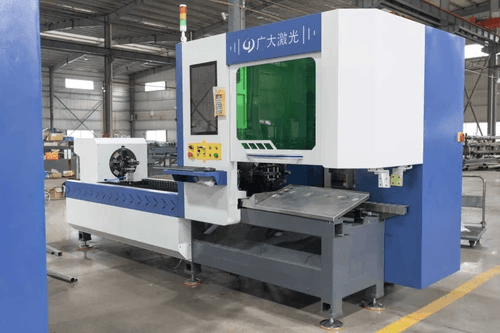
The first issue is material mix. A shop that mostly cuts thin sheet at high volume has one set of priorities. A shop that regularly sees medium plate, stainless work, carbon steel, aluminum, cosmetic panels, brackets, and urgent repair jobs has another. A 10kW discussion should start with the percentage of work in each family, not with a single impressive sample.
Buyers should list the top recurring jobs by material, thickness class, edge requirement, batch size, and next operation. Then they should add the difficult jobs that currently create rework or delays. This mix shows whether the power class fits normal production or only occasional work.
Competitor literature from TRUMPF, Bystronic, and Mazak often presents power together with automation, process functions, and application fit. That is the right lesson to borrow. The buyer is not purchasing a wattage number. The buyer is purchasing a production method.
Gas Supply Should Be Sized Around Real Jobs
A 10kW fiber laser cutting machine can place serious demands on assist gas planning. Stainless steel, aluminum, and clean-edge work often drive nitrogen discussions. Carbon steel may involve oxygen, nitrogen, air, or mixed approaches depending on the required edge and downstream process. The right gas plan depends on the shop's parts, not on a generic rule.
Gas supply should be reviewed for pressure stability, purity, delivery method, storage, backup, operator checks, and cost records. The shop should also decide how to respond when symptoms appear. Dross, discoloration, unstable piercing, rough lower edges, or inconsistent quality may point to gas, but they can also point to material, focus, nozzle, or program sequence.
For buyers, gas is a capacity issue as much as a consumable. If the machine can cut but the gas supply cannot support the intended schedule, the cell is not ready. If gas cost is ignored, quoting may be wrong. If edge acceptance is ignored, rework may hide the real cost.
Table Rhythm Can Beat Cutting Speed

Machine format should be evaluated by table rhythm. How quickly can material be loaded? How easily can finished parts be removed? Can the operator protect cosmetic parts? Are heavy blanks handled safely? Does the shop have carts, trays, labels, and scrap routes ready? A fast cut followed by a slow table does not create a fast cell.
The Interchangeable Laser Cutting Machine can be discussed when buyers want a table-exchange rhythm, while the Single Platform Laser Cutting Machine can be considered when layout simplicity or a different flow is more important. The Large Enveloping Laser Cutting Machine may enter the review when part envelope and handling space matter.
The best test is practical. Run a representative nest, unload it as production would unload it, protect the surfaces that matter, label parts by destination, remove skeletons, and prepare the next sheet. If that route is slow, the cell needs more planning before power becomes the headline.
The First Month Should Have a Scorecard
After installation, the first month should convert assumptions into evidence. Track accepted parts, recuts, material delays, gas use by job family, consumable changes, table waiting time, unloading labor, downstream complaints, and first-part failures. The scorecard should not punish operators for learning. It should show where the cell needs adjustment.
A 10kW machine may reveal hidden problems quickly. If programming queues grow, the office needs better release discipline. If unloading is slow, carts and staffing may need work. If stainless jobs consume more gas than expected, quoting and gas planning need review. If downstream departments cannot keep up, production planning must change.
The scorecard also protects future buying decisions. Once the shop understands how this power class behaves in its own route, managers can make better choices about automation, shifts, maintenance intervals, training, or additional equipment.
Maintenance Should Be Built Into the Cell
A higher-output cell needs disciplined maintenance. Nozzle condition, protective optics, slats, scrap buildup, cooling, filters, gas lines, compressed air quality, and general housekeeping all influence the process window. If maintenance is treated as downtime stolen from production, the machine may lose quality in small increments until rework becomes normal.
The maintenance plan should define operator checks, technician work, supplier service tasks, and safety-controlled procedures. Operators need to know what they can inspect, what they must record, and when to stop. Supervisors need a schedule that prevents routine care from being sacrificed to urgent jobs.
Kiant Machinery's services are relevant when buyers want installation, training, after-sales support, and tailored machinery discussions to support stable operation. A power-class decision without support planning leaves too much to improvisation.
Do Not Ignore the Downstream Route
The downstream route sets the value of the laser. Bend-ready blanks need orientation, surface protection, and accurate notches. Welded parts need fit, edge condition, and set identity. Stainless decorative parts need bright surfaces and careful handling. Thick carbon steel parts may need inspection before welding or coating. If these needs are not known before cutting, the machine can produce parts that look complete but are not ready.
Buyers should bring downstream people into the discussion. The press brake team, welders, finishing department, quality staff, and shipping team each see problems that may not be visible at the cutting table. Their input helps define sample trials and acceptance standards.
When a buyer is ready to compare a 10kW cell with actual part families, the Kiant contact channel is more productive if those downstream requirements are already collected.
Floor Layout Has to Leave Room for Work
A 10kW-class cutting cell can be limited by floor layout long before it reaches its theoretical production rhythm. The shop needs space for raw sheets, remnants, finished-part carts, scrap bins, gas equipment, inspection benches, operator access, maintenance access, and safe movement around heavy material. If every square foot is already contested, operators may spend more time moving obstacles than feeding the machine.
Layout review should include the awkward jobs, not only the average jobs. Heavy sheets, oversized parts, cosmetic stainless panels, urgent small batches, and mixed nests all create different floor-space needs. A layout that works for one clean demonstration sheet may become tight during a normal week. Buyers should sketch the physical route before they decide the cell is ready.
The Parameter Library Should Match the Mix
A 10kW fiber laser cutting machine needs a parameter library that reflects the shop's actual material mix. Operators should not have to reinvent settings for common sheet families, and they should not trust old settings when material condition, gas supply, nozzle state, or downstream requirements have changed. A useful library includes the approved condition, the first-part standard, and the trigger that requires a re-check.
The library should grow during the first month. Accepted samples, parameter notes, gas records, and downstream feedback can show which settings are stable and which need more control. This turns early production into a training asset. It also keeps the machine from depending too heavily on one experienced operator's memory.
Parameter ownership should also be clear. Operators may suggest changes, supervisors may approve production standards, and maintenance or supplier support may be needed when a symptom points beyond normal operation. If everyone can edit the library without a reason, the shop loses traceability. If nobody can update it, the shop keeps repeating old assumptions.
A simple approval record protects both speed and discipline. The record can show the material, gas, nozzle condition, sample result, change reason, and person responsible for the update.
That record is especially useful when urgent jobs interrupt the normal schedule. The team can return to the approved condition instead of relying on memory after a rushed adjustment.
Stable records make flexible scheduling safer.
They also make training easier.
A Whole-Cell Readiness Test
- Group the job mix by material, thickness class, batch size, edge requirement, and next operation.
- Test gas supply, cut quality, consumables, and first-part approval with representative production work.
- Run loading, unloading, sorting, surface protection, and skeleton removal as part of the trial.
- Measure table waiting time and downstream acceptance, not only cutting speed.
- Define operator maintenance checks and service escalation before the first month begins.
- Use first-month evidence to adjust nesting, training, quoting, and production planning.
Conclusion
A 10kW fiber laser cutting machine should be tested as a whole cell. The buyer needs to understand material mix, gas planning, table rhythm, maintenance, training, and downstream capacity before deciding whether the power class fits. When the whole route is ready, the machine can support real production. When the route is weak, the number on the laser source will not save the schedule.