
A roll forming machine for steel framing can improve production only when the factory has a coherent route from approved data to accepted building components. Speed matters, but speed alone does not define useful output. A fast line that produces mixed members, unclear revisions, incomplete kits, or panels that need repeated correction will create work for assembly, packing, and site teams.
The stronger buying question is whether the line can support the buyer's real release unit: individual members, wall-panel kits, assembled panels, roof components, or complete project zones. That release unit determines how the machine should be commissioned, how operators should be trained, and how quality checks should be placed along the route.
Start With the Framing Package, Not the Machine Cabinet
Steel framing production begins with project information. Member schedules, wall layouts, opening details, connection requirements, quantities, revisions, and shipping sequence all shape the work before coil reaches the forming line. If the data is unclear, the machine may produce accurate pieces that do not assemble into the correct package.
Kiant's light gauge steel production equipment should be evaluated against the buyer's framing package. A factory shipping loose members needs strong kitting and labeling. A factory building panels needs fixture discipline, opening checks, and panel-handling rules. A prefab supplier needs sequencing that protects installation logic.
This approach keeps the discussion practical. It avoids treating the machine as a standalone answer and instead asks how the whole production route will convert design intent into usable framing output.
Data Release Sets the First Tolerance Boundary
Before physical tolerances appear, the factory must control information tolerance. Job names, revisions, member identifiers, quantities, and panel groupings must be clear enough for operators and assemblers to follow. A small data mistake can produce a large physical correction later.
The buyer should test how jobs are released to the forming line. Who approves the production package? How are revised files named? How are obsolete files removed? How does the operator confirm the correct job and material? How are members connected to the right panel or bundle after they leave the line?
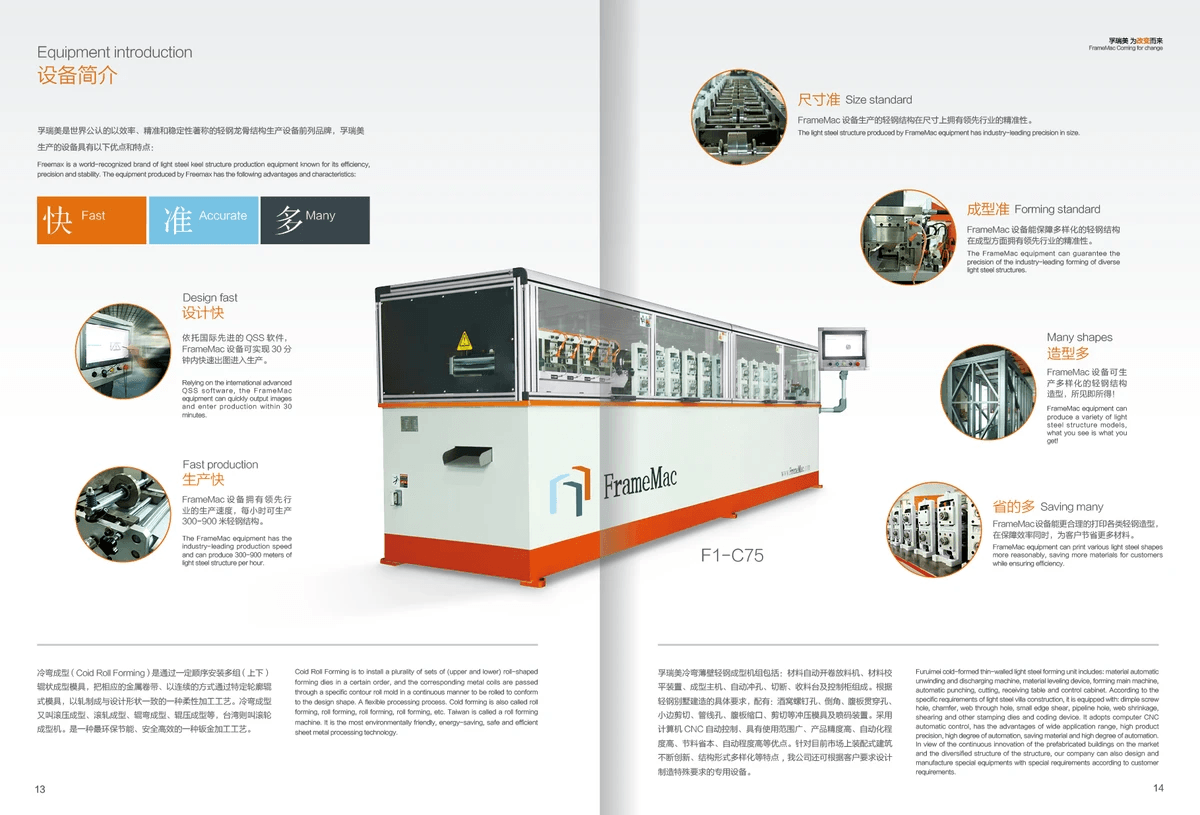
Kiant's FrameMac can be included when buyers want a named light gauge steel machine option. The acceptance discussion should still include file release, first-member checks, and revision drills because those controls protect the value of any steel framing line.
Coil Handling Must Be Visible and Traceable
Coil handling often looks simple until production pressure rises. The factory needs to identify material, stage coils, manage partial coils, confirm material before loading, and keep the route clear around the line. If operators are unsure which coil belongs to which job, the forming machine becomes a very efficient way to create uncertainty.
A practical audit maps the coil route. Incoming material is identified, staged, moved to the machine, loaded, used, stored if partially consumed, and connected to production records. This does not require excessive paperwork, but it does require a method that operators can follow during a normal shift.
Material traceability is especially important when several projects use similar profiles or when project requirements differ. The factory should be able to determine which material was used for a member family without searching through memory or informal notes.
Member Identity Has to Survive Collection
Steel framing members often look similar. A short stud, a mirrored piece, a revised track, or a member with a slightly different feature can be easy to confuse in a busy workshop. The identity method must survive forming, collection, staging, assembly, packing, and shipment.
The factory may use labels, printed travelers, cart positions, bundle separators, color codes, or digital tracking. The specific method is less important than whether it works under real conditions. If a label falls off after one lift or a cart position is unclear when two jobs run close together, the method is not strong enough.
Commissioning should include a mixed-member test. Produce a family with similar-looking parts, then ask the team to assemble or kit the output without special coaching. The exercise reveals whether identity is actually preserved or only assumed.
Assembly Feedback Should Return to the Line
The assembly table is often where forming problems become obvious. Members may be difficult to locate, openings may need correction, a revised part may enter the wrong kit, or a small feature may not match the fixture. If assembly feedback is informal, the same issue can repeat in the next project.
A simple feedback loop is enough. Record the member family, job revision, issue, correction, and whether the problem came from data release, material, forming, collection, fixture setup, or handling. Review recurring issues while the project is fresh. This gives production managers evidence for improvement instead of a collection of complaints.
BuildSteel's cold-formed steel framing materials emphasize that framing is an engineered system with project-specific requirements. For production teams, the lesson is that members should be evaluated in the context of the assembly and project package, not as isolated pieces of formed steel.
First-Panel Trials Beat Simple Demonstrations
A simple sample member can prove that a profile is possible. It cannot prove that the factory is ready for real steel framing production. A first-panel trial is stronger because it includes real job data, multiple member types, collection, assembly, inspection, and release decisions.
The trial should include an opening, repeated members, short members, left-right or mirrored parts if applicable, and at least one change scenario. If the factory ships kits instead of panels, the same idea applies to a first-kit trial. The output should be inspected as the buyer will actually sell or release it.
Kiant's services information is relevant when buyers discuss installation, training, commissioning, and support. The trial should be planned before production targets are announced, because early training habits often become the line's long-term habits.
Metrics Should Reward Accepted Output
Roll forming lines can produce impressive length totals, but length is not the same as accepted framing output. Better metrics include complete kits released, accepted panels, revision errors avoided, missing-member events, assembly corrections, and packages dispatched without identity problems.
Machine runtime and formed length still matter, but they should sit beside route metrics. If the machine runs faster than assembly or packing can handle, the factory may create work-in-process inventory instead of useful production. The metric set should expose that imbalance early.
Procurement teams can review Kiant's company background and use contact details to discuss project packages, line goals, and commissioning expectations. A useful inquiry includes sample framing data and the planned release unit.
Revision Drills Protect the Real Schedule
Steel framing work often changes after initial release. A wall opening may move, a member may be revised, a project zone may be resequenced, or an installer may request a remake. The roll forming route should include a revision drill before full production pressure arrives. The drill proves whether the factory can stop, isolate, revise, remake, and restart without mixing parts.
A useful drill begins with a small panel or kit. Produce part of the job, introduce a controlled revision, and require the team to identify which members are accepted, which are obsolete, and which must be remade. The drill should include the operator, collection area, assembly team, and packing team. If any group relies on informal memory, the process needs clearer signals.
Revision control also protects customer confidence. The factory should be able to explain which version was produced and shipped. That traceability does not require overcomplicated documentation, but it does require a consistent rule that survives ordinary schedule pressure.
Packing Is a Production Gate, Not a Warehouse Task
Packing is where the factory confirms that formed members have become a usable delivery. If packing is treated as simple storage, missing parts, unclear bundles, damaged members, or mixed revisions can travel to the site. The roll forming line should therefore be planned with packing and dispatch in mind.
For loose kits, packing should preserve erection sequence and member identity. For assembled panels, packing should protect geometry and surfaces. For project zones, bundles should make shortages visible before shipment. Packing checks should connect back to production records so that a missing member can be traced to file release, forming, collection, assembly, or dispatch.
Site feedback should return to the factory. If installers repeatedly report unclear bundles or damaged members, the production route is not finished. That feedback can improve labeling, cart flow, inspection, and packing rules for the next project.
Training Should Follow the Real Output Route
Operator training should not stop at starting the machine and confirming a formed profile. The team also needs to understand how job files are released, how member marks are checked, how partial coils are recorded, and how formed pieces are handed to assembly or packing. Training is stronger when it follows the same route that a real project follows through the factory.
This approach prevents a common gap in new lines: the machine operator may learn the equipment, while the rest of the factory still treats formed members as loose material. A short cross-functional training session can connect programming, forming, collection, panel assembly, inspection, and dispatch so that every group understands the signals it must protect.
A Steel Framing Line Test Pack
- Define whether the factory releases members, kits, panels, or project zones.
- Test job release, revision handling, obsolete-file control, and operator confirmation.
- Map coil identity, partial coil storage, and material confirmation before loading.
- Produce a mixed member family and verify identity through collection and assembly.
- Run a first-panel or first-kit trial using real openings, repeated members, and inspection points.
- Measure accepted output, not only formed length or machine runtime.
Conclusion
A roll forming machine for steel framing should be evaluated by the output route it supports. Data control, coil handling, member identity, assembly feedback, first-panel trials, and accepted-output metrics all matter. When those controls are planned before production begins, the machine becomes part of a coherent framing system rather than a fast island inside the factory.