
A steel framing machine is usually purchased to make production more organized, but the machine cannot fix a factory that has not defined what ready output means. In light gauge steel framing, the useful deliverable may be loose members, wall-panel kits, assembled panels, roof components, or house-keel packages. Each deliverable demands a different level of sequencing, labeling, inspection, and packing discipline.
For that reason, a buyer should audit production readiness before comparing machine offers too closely. The audit does not need to be complicated. It should trace how approved design information becomes formed members, how those members remain identifiable, how assembly or kitting is verified, and how the first real project will be commissioned. This turns the steel framing machine discussion into a factory-output discussion instead of a narrow equipment conversation.
Define the Release Unit Before Defining Capacity
The first question is not how fast the line can form material. The first question is what the factory will release. A wall-panel supplier may need accepted panel frames with openings checked and member identity preserved. A component supplier may ship bundled studs and tracks by project zone. A prefab builder may need complete kits staged by installation sequence.
Those release units change the machine plan. A shop that ships assembled wall panels must consider assembly tables, fixture checks, diagonal measurements, opening geometry, and panel storage. A shop that ships loose kits must focus on member sequence, bundle accuracy, missing-part prevention, and clear documentation. Kiant's light gauge steel production equipment should be reviewed against the buyer's release unit, not only against a general forming concept.
This boundary also keeps structural responsibility clear. Building design, engineering calculations, connection requirements, and code compliance should be handled by qualified professionals under the applicable project rules. The factory's production task is to manufacture and organize the approved information without losing revision control.
Data Control Is the First Material Flow
Steel framing output begins with files, drawings, quantities, revisions, and member identifiers. If the line receives incomplete or unclear information, operators may form individually accurate members that do not belong together. That problem may not appear until assembly, shipment, or job-site installation.
The audit should check who releases production files, how revisions are named, how obsolete information is removed, and how operators confirm that the correct job is loaded. It should also test whether the team can stop a job, apply a revision, and restart without mixing old and new members. Revision handling is not paperwork; it is a production control.
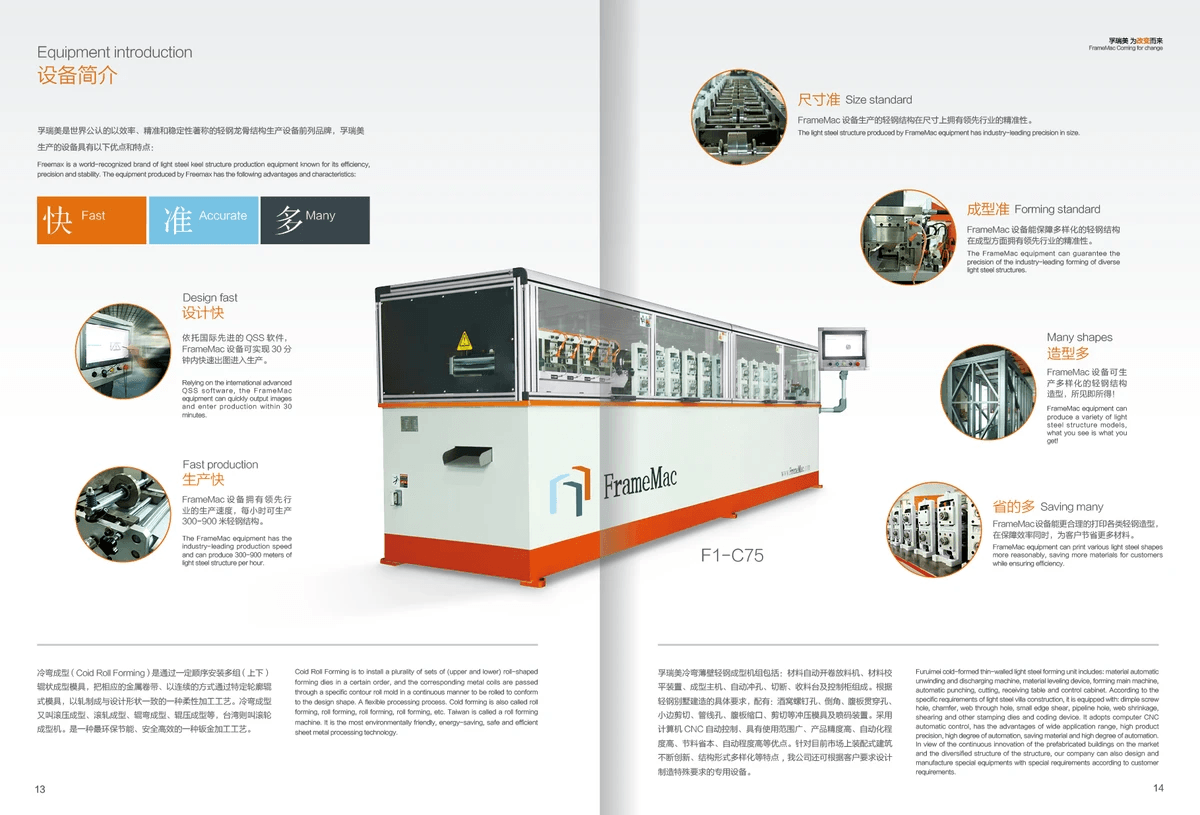
Kiant's FrameMac can be part of a framing-line review when buyers want a named light gauge steel machine option. The stronger evaluation still pairs the equipment discussion with the buyer's file-release and revision process.
Coil Handling Should Match Real Job Rhythm
Coil supply affects the daily rhythm of a steel framing machine. The factory needs space for incoming material, staging, identification, loading, and safe movement around the line. If coil changes are poorly planned, the machine may sit idle while operators look for material or confirm which coil belongs to the next project.
The readiness audit should map common material changes. Which gauges or coatings are used most often? How are coils identified? Where are partial coils stored? Who confirms that the correct material is loaded? The exact material rules depend on the buyer's projects and specifications, but the production route should make mistakes hard to create and easy to catch.
Material identity should connect to member identity. If a project requires a certain material condition, the production record should show how that material moved through the line and into the correct member set. Without that connection, quality problems become hard to trace after members have been bundled or assembled.
A First-Panel Trial Reveals More Than a Sample Member
A sample member can show that a machine forms a profile, but it does not prove production readiness. A first-panel trial is more useful because it forces the team to run actual data, produce a mixed member set, keep parts identifiable, assemble or kit the output, inspect critical features, and clear the work area for the next job.
The trial should include openings, short members, repeated studs, tracks, mirrored details, and any feature that tends to cause confusion. For assembled panels, the team should check squareness, openings, member count, orientation, and feature readiness. For loose kits, the team should confirm bundle sequence, shortage visibility, and documentation clarity.
BuildSteel's cold-formed steel framing information emphasizes that cold-formed steel framing is an engineered building method with project-specific design considerations. A manufacturer should take the practical lesson seriously: production trials should respect the released design information and should not treat different projects as interchangeable.
Inspection Should Be Built Into the Route
Inspection becomes weaker when it is treated as a final stop. In steel framing production, many errors are easier to catch earlier. Wrong revision, missing member, confusing label, incorrect bundle, or fixture setup drift may be visible before the finished unit is packed. The audit should decide where these checks belong.
Useful checks may include file confirmation before the run, first-member review, member count by panel, feature inspection for high-risk members, assembly geometry checks, kit-completeness checks, and shipping-release confirmation. The list should reflect the factory's product and customer requirements. A small factory does not need excessive paperwork, but it needs a route that catches predictable mistakes.
Kiant's services information is useful when buyers discuss installation, operator training, and after-sales support. The service conversation should include how the first project will be tested, who trains operators, and how early production feedback will be handled.
Packing and Site Feedback Close the Loop
Steel framing production does not end when members leave the forming line. Packing and site feedback often reveal whether the factory's organization method works. If installers open a bundle and find missing parts, unclear sequence, damaged members, or mixed revisions, the production problem has traveled all the way to the customer-facing stage.
The readiness audit should therefore include packing logic. Define whether members are packed by wall, floor, zone, truck load, or erection sequence. Decide how labels survive transport, how small members are protected, and how revised or remake parts are added to a shipment. If assembled panels are shipped, the factory should define how panels are supported, stacked, and checked before dispatch.
Feedback from the first project should return to production. Missing member reports, unclear labels, installation delays, damaged bundles, or repeated assembly questions should be reviewed while the job is still fresh. This feedback can improve the next file release, member collection, inspection sheet, or packing method.
Output Metrics Should Match Accepted Framing Work
A steel framing machine can produce many meters of profile, but meters do not always describe useful output. A better metric depends on the factory's business model. It may be accepted wall panels per shift, complete kits released, members produced without identity loss, revision errors avoided, or project zones packed correctly.
During commissioning, managers should choose a small set of output metrics that reveal real readiness. Machine runtime and formed length are still useful, but they should be paired with accepted output. If the line produces members faster than the factory can assemble, inspect, or pack them, the metric should expose that imbalance instead of hiding it.
Supplier Evaluation Should Include the First Month
Many steel framing machine projects look organized during installation and become harder once ordinary production pressure returns. The first month matters because operators meet real revisions, mixed job families, coil changes, urgent schedules, and downstream feedback. A buyer should plan how support and internal review will work during this period.
The first-month review can be simple. Record job families produced, missing-member events, revision issues, assembly corrections, coil-change delays, operator questions, and accepted output. Review the evidence weekly. The goal is not to blame people; it is to stabilize the route while habits are still forming.
Procurement teams can review Kiant's company background and use contact information when they are ready to discuss project mix, installation expectations, and support scope. The better inquiry includes drawings, output goals, and first-production priorities.
A Readiness Audit Checklist
- Define the release unit: loose members, kits, wall panels, truss components, or project zones.
- Test file release, revision naming, obsolete-data control, and operator confirmation before the first production run.
- Map coil staging, partial coil storage, material identity, and material change rhythm.
- Run a first-panel or first-kit trial using real openings, repeated members, and confusing part families.
- Place inspection points at file release, first member, collection, assembly, packing, and shipment where needed.
- Review first-month production evidence before setting aggressive output targets.
Conclusion
A steel framing machine should be evaluated through production readiness. Buyers who define their release unit, control data, protect material identity, test real panels, and plan first-month support will have a clearer view of what the machine needs to do. The strongest framing projects treat the machine as part of a controlled route from approved information to accepted building components.
That route also gives teams a practical way to improve after installation. When every issue can be traced to data release, material flow, forming, assembly, packing, or site feedback, the factory can solve the real cause instead of adding more manual checking at the end of every project.