
Repeatability Is the Real Cost Line
Square tube furniture work often hides its cost in tiny corrections. One end needs a quick trim, one corner sits slightly off in the fixture, or a welder loses time persuading a frame to close cleanly. None of those delays looks dramatic on its own. Across a production week, though, they turn into a meaningful labor line.
That is why square tube cutting for furniture frames should not be judged only by how fast the machine cuts profile stock. It should be judged by whether the parts keep landing in the fixture the same way, across the same frame family, with less operator intervention.
A Useful Diagnostic: Watch the Welding Station, Not Just the Cutting Area
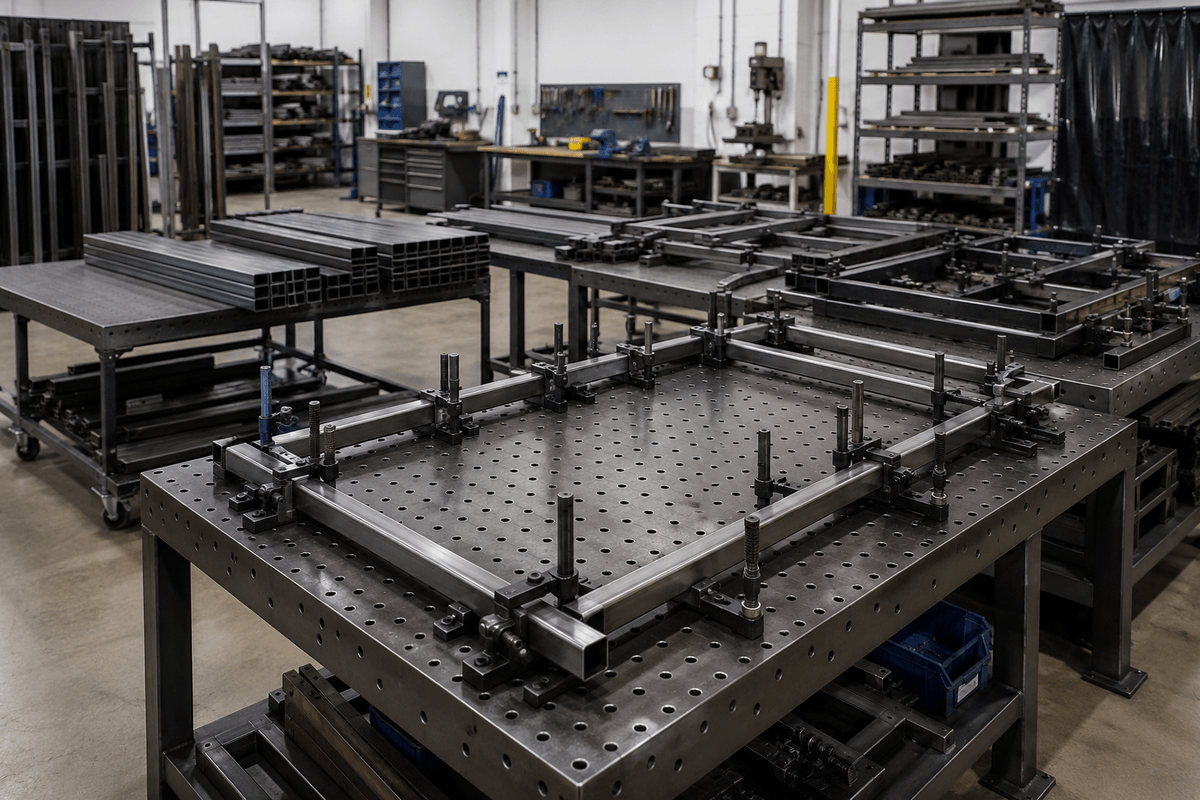
Production managers can learn a great deal by watching what happens after the parts leave the cutting area. If weld fixtures are constantly being adjusted, if operators are filing ends before tack-up, or if assemblies drift dimensionally from one batch to the next, the shop is paying for unstable preparation. In many cases, that instability matters more than nominal machine speed.
For this topic, Kiant's laser tube cutting machine page is the right primary internal link because it is the site's working category for tube-processing equipment. When a closer commercial path helps, pages like Y90 Store lightweight machine and M12Y Store lightweight machine are better choices than recycling a generic brand section.
What Good Frame Repeatability Actually Changes
Better repeatability changes several things at once. It reduces correction before welding. It keeps fixture loading more predictable. It lowers the chance that downstream finishing teams inherit visible inconsistency. It also makes mixed-batch production easier because operators spend less time re-learning part behavior from one frame family to the next.
In furniture manufacturing, those gains are often more financially important than a narrow discussion about cut time alone.
Buyer Questions That Separate Serious Projects From Vague Ones
- Which square-tube frame families create the most recurring correction work today?
- How often do fixtures need manual adjustment to keep assemblies aligned?
- Does the factory run long repeat batches, high-mix custom work, or both?
- Which downstream teams feel the impact first when cut preparation drifts?
- Will the supplier also need to support setup, training, or early process stabilization?
Service Support Matters More Than Many Shops Expect
Repeatability depends partly on the machine and partly on how the process is introduced. That is why Kiant's services page is commercially useful for this keyword. Shops moving from manual or semi-manual preparation to a more consistent programmed workflow often need support around setup, operation, and early production discipline.
The contact page is also a natural link when the reader is ready to compare recurring frame geometries and discuss whether a named model page fits the workload.
Conclusion
Square tube cutting for furniture frames becomes more valuable when it removes routine rework from the welding line. Buyers who measure repeatability by fixture stability and downstream correction are usually much closer to the real business case than buyers who compare cutting alone.