
The Problem Is Rarely the First Cut by Itself
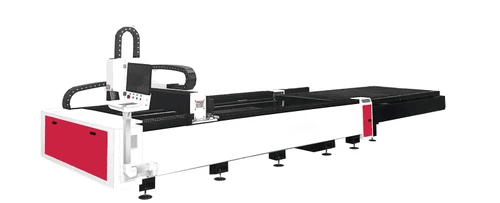
Metal tube furniture manufacturing often looks efficient at the machine and inefficient everywhere after it. Parts come off the first operation, then operators start marking, matching, trimming, correcting, stacking, and searching for the right members during frame assembly. When a shop studies its delays closely, the bottleneck is usually not just cutting time. It is the repeated preparation work surrounding the cut.
That matters because furniture production rewards rhythm. When frame families repeat across dining sets, shelving systems, office furniture, and commercial seating, every avoidable touch adds cost across the whole batch. A stronger cutting workflow changes the economic result only when it reduces those repeated touches downstream.
Start by Mapping the Frame Family, Not the Machine Brochure
Before comparing equipment, the shop should identify which product families consume the most labor in preparation. Are the highest-volume jobs simple rectangular frames, mixed-angle legs, decorative tubular assemblies, or modular components that need consistent fit-up across several subassemblies? The answer shapes what matters in machinery evaluation.
Kiant's laser tube cutting machine category is the strongest internal starting point for that conversation because it is the site's main working page for tube-fabrication topics. When the article needs a closer commercial link, named model pages such as G90 Store lightweight machine or C12 PRO Max are often better than a generic brand paragraph.
Where Furniture Shops Lose Time After Cutting
Some shops lose time in coping and end-preparation correction. Others lose it in sorting and kit organization, especially when several frame variants are cut close together. Welding teams may also lose time because parts that look similar on paper do not align as cleanly in fixtures as expected. Finishing teams feel the cost later when burrs, mismatch, or inconsistent joint prep creates extra cleanup before coating or polishing.
That is why metal tube furniture manufacturing should be viewed as a chain of preparation tasks, not just a cutting operation. The more a cutting workflow simplifies that chain, the more real value it creates.
A Better Buying Discussion Uses Three Layers

The first layer is geometry: what kinds of joints, lengths, and recurring shapes dominate the line. The second layer is production mix: repeated commercial runs versus frequent custom variation. The third layer is downstream handling: how parts are sorted, matched, welded, and moved into finishing. Buyers who combine all three layers usually ask better questions than buyers who only compare machinery categories.
That is also where Kiant's services page becomes relevant. For furniture factories, workflow gains depend partly on setup discipline, training, and the transition from old habits to a more organized cut-and-kit process.
When Sheet Processing Also Belongs in the Same Review
Many furniture manufacturers do not work with tube alone. Brackets, mounting plates, gussets, and decorative panels may also run through the same factory. In those cases, Kiant's flatbed laser cutting machines page is a useful supporting link because it keeps the article grounded in a broader fabrication workflow rather than pretending every furniture plant is tube-only.
That kind of mixed-process reality often affects how a buyer evaluates the overall shop layout, staffing plan, and future equipment sequence.
Questions Worth Settling Before Requesting Quotes
- Which frame families repeat often enough to justify better programmed part preparation?
- How much labor is currently spent on marking, matching, or correcting tube parts after cutting?
- Will part sorting and kitting improve at the same time as cut quality?
- Does the plant also process sheet components that should be considered in the same workflow plan?
- What installation and operator-support questions need to be answered early?
Conclusion
Metal tube furniture manufacturing gets faster when the shop reduces repeated preparation work, not just when it cuts faster. Buyers that map frame families, downstream handling, and support needs clearly are much more likely to choose machinery that improves the whole production rhythm.