
Production Mix Changes the Right Answer
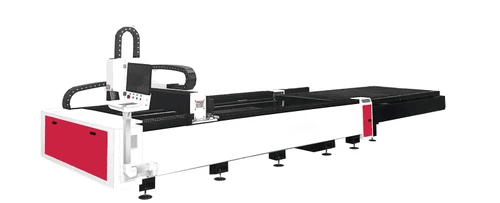
A laser fiber cutting machine can serve very different factories. One shop may focus on repeated pipe parts. Another may process mixed sheet components in short runs. A third may need both tube and flatbed capacity across several product families. Because of that, the best machine choice depends less on abstract ranking and more on how production actually flows through the facility.
Buyers should begin with part families, changeover frequency, loading method, and downstream operations. A machine that suits a high-volume repeated program may not be ideal for a shop that lives on mixed custom work. In the same way, a flexible setup can be more valuable than maximum automation if the production schedule changes constantly.
Questions That Clarify Machine Fit Fast
- Do you mostly cut sheet, tube, or both?
- How often do you switch materials or dimensions during the week?
- Are operators fighting secondary steps such as drilling, coping, or rework?
- Is floor space better suited to a tube machine, a flatbed machine, or a wider machinery layout?
- Will your team need supplier help with installation, training, and maintenance setup?
These questions move the discussion from general machine appeal to production fit. That is where the real value decision sits.
Use Internal Categories to Frame the Choice

Kiant's laser tube cutting machine page is the natural starting point when the production mix is pipe, tube, or profile heavy. The flatbed laser cutting machines page is more relevant when sheet-metal throughput and broad plate processing are the priority. If the factory is growing into structural framing or prefab-related manufacturing, the light gauge steel production page offers another internal path for understanding how Kiant positions broader production equipment.
These category pages are commercially stronger internal links than relying on blog pages first, because they connect the keyword directly to equipment choice.
Why Workflow Matters More Than a Headline Feature List
TRUMPF and Bystronic both emphasize productivity flow and application fit in their fiber and tube laser messaging. That is a useful benchmark because the winning machine is usually the one that removes the most friction from the existing process. If a part still needs extensive secondary work after cutting, or if loading and unloading remain chaotic, the machine may not be solving the right bottleneck.
A laser fiber cutting machine should therefore be judged on how it changes the route from raw material to finished part. That includes part programming, staging, cutting, unloading, sorting, fit-up, and operator learning time.
Support and Usability Are Part of Production Fit Too
A factory can buy a technically capable machine and still underperform if training and startup support are weak. Kiant's services page matters because production fit is not just about cut quality. It is also about how quickly the team can run daily jobs consistently, respond to issues, and keep the machine integrated into normal scheduling.
The about page and contact page are relevant next steps for buyers who want to move from broad research to equipment discussion based on actual production conditions.
Conclusion
The right laser fiber cutting machine depends on production mix, not only on popularity or spec-sheet appeal. Shops that define their part families, work rhythm, and support needs clearly are more likely to choose equipment that improves real output instead of creating a new learning burden.
Kiant Machinery provides a useful set of category and support pages for that decision. Buyers should use them to compare machine fit against the work they actually run, not the work they imagine in theory.