
Laser cutting parameters are often discussed as if they were a secret table of numbers. In real production, they are better understood as a controlled process window. Laser power, focus position, nozzle selection, assist gas, cutting speed, piercing method, material condition, and part geometry all interact. A setting that works on one job family may fail on another if the surface, thickness, feature density, or downstream quality requirement changes.
This matters for buyers because parameter discipline affects the real value of a machine. A shop evaluating flatbed laser cutting machines should ask how operators will develop, approve, record, and protect parameters for common materials. A shop with profile work should include tube-specific questions when reviewing a laser tube cutting machine, because rotation, seam position, and fixture fit add another layer to the process window.
Parameters Begin With Material Condition
Before anyone changes a cutting parameter, the material should be understood. Grade, thickness, surface condition, protective film, rust, oil, flatness, and remnant history can all influence cutting behavior and finished part handling. If the material has changed but the operator assumes it is the same, parameter changes may hide the real cause of the problem.
Material condition also affects inspection priorities. Cosmetic stainless parts may need a different handling standard from structural brackets. Thick plate may need more attention to edge condition and heat behavior. Thin sheet may expose movement or small-feature problems. A shop that records material condition beside parameter changes will learn faster than a shop that only records whether a part passed or failed.
The first question should therefore be simple: is the material the same as the approved condition? If not, the operator should record the difference before adjusting focus, speed, gas, or piercing. That habit protects the process history.
Focus, Nozzle, Gas, and Speed Move Together

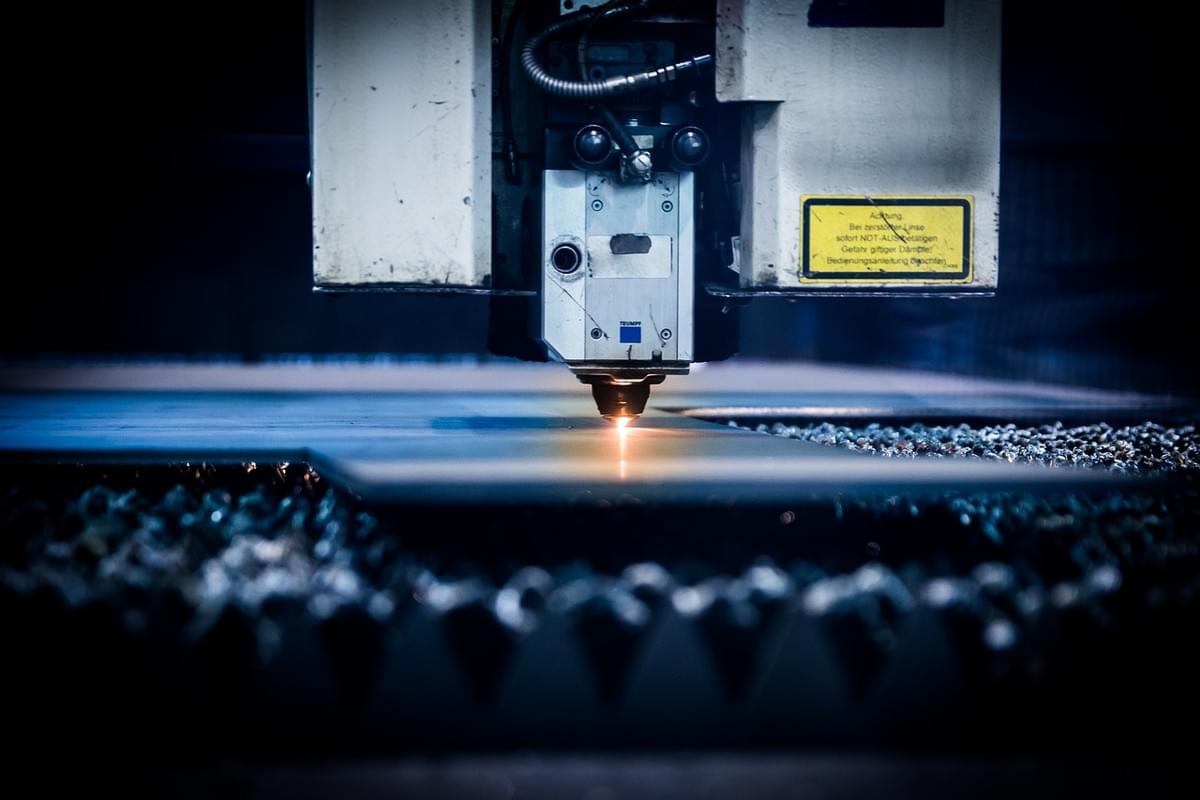
TRUMPF's laser cutting process explanation highlights several core influences on the cut: focused optics, laser energy, cutting gas, nozzle behavior, operating mode, and cutting speed. This is a useful reminder that parameters do not act alone. A speed change may require attention to gas flow. A nozzle issue may look like a parameter issue. Focus position can alter how energy reaches the workpiece and how the kerf forms.
Operators should avoid changing several variables at the same time unless the procedure specifically calls for it. Multiple changes can produce one acceptable part while leaving the cause unknown. A more disciplined method changes one controlled item, checks the result, and records what happened. This may feel slower at the moment, but it protects repeatability across shifts.
Buyers should also ask how parameter information is transferred during training. If parameter knowledge lives only in one experienced operator's memory, the process window is fragile. If the approved setup, sample result, material note, and change reason are visible, the shop can train new operators without reinventing the same decisions.
First Parts Need a Real Inspection Sequence
A first part should not be inspected only because the shop wants to say the job has started. It should answer specific questions. Did the material match the program? Did piercing complete cleanly? Are small holes acceptable? Are contours correct? Is edge condition suitable for the next process? Are visible surfaces protected? Does the part fit the gauge, fixture, bend sequence, or assembly need?
This sequence will vary by product family. A part headed to bending may require more attention to orientation and notch quality. A decorative part may need closer surface review. A bracket with many holes may expose heat, slag, or feature distortion issues. A tube assembly may need fixture confirmation, not only dimensional checks on a table.
Kiant model options such as the Large Enveloping Laser Cutting Machine and Single Platform Laser Cutting Machine should be discussed in relation to the parts they will run and the checks those parts require. The machine format matters, but the accepted-part standard matters just as much.
Parameter Changes Need a Reason Code
Parameter history becomes useful when changes have reasons. A shop can use simple labels such as material batch, burr, incomplete cut, rough edge, heat effect, piercing instability, small-hole issue, surface mark, gas condition, or operator trial. The label does not need to be perfect. It only needs to be specific enough to help the next person understand why the approved condition changed.
This is especially important during commissioning and the first month of production. Early jobs often reveal differences between sample parts and real work. Operators may discover that a common remnant behaves differently, that a nested part needs better support, or that downstream bending is more sensitive than expected. If the reason is recorded, the shop can improve the standard. If not, the next shift may repeat the same trial.
Reason codes also reduce arguments between departments. If welding says parts are hard to fit, the laser team can review the parameter record, material record, and first-part result. The conversation becomes evidence-led rather than blame-led.
Sheet and Tube Jobs Expose Different Risks
Sheet parameters often show their problems at the edge, corner, hole, pierce point, or surface. Tube parameters can add orientation and fixture risks. A cut slot may be dimensionally acceptable but rotated incorrectly. A miter may look clean but still require fixture correction. A visible tube face may be scratched during unloading even though the cutting parameter was stable.
For tube-related production, Kiant named models such as the Y90 Store lightweight machine and M12Y Store lightweight machine can be part of a broader review of profile families, job mix, and operator routines. Buyers should avoid asking only whether the machine cuts tube. They should ask how tube sets will be loaded, identified, inspected, and delivered to assembly.
For sheet work, parameter control should connect to nesting and unloading. Dense nests, small parts, thin bridges, heavy blanks, and cosmetic sheets all create different risks. A parameter that is technically acceptable may still fail the production route if parts shift, scratch, or require excessive sorting.
Training Keeps the Window Stable
Training is where parameter control becomes repeatable. Kiant Machinery's services are relevant for buyers who want setup, training, after-sales support, and tailored machinery discussions to connect with real operating habits. The buyer should prepare representative jobs, common materials, quality expectations, and downstream examples before training begins.
Training should include abnormal situations. What should the operator do when burr appears? What if the first part is acceptable but the third sheet drifts? What if a remnant does not match the expected condition? What if a tube feature fails in the fixture? These questions teach operators how to protect the process window without guessing.
When buyers want to discuss a specific job mix, it helps to bring drawings, material notes, sample quality issues, and production goals through the Kiant contact channel. A focused discussion makes parameter expectations more practical than a broad request for general cutting capability.
Approved Settings Should Have an Expiration Trigger
An approved parameter should not be treated as permanent under every condition. It needs an expiration trigger, meaning a point where the operator must re-check the setting before trusting it again. Triggers can include a new material batch, a different supplier lot, a surface-condition change, a different nozzle condition, a machine service event, a new part family, or a downstream complaint that points back to cutting.
This does not mean the shop must rebuild its process for every job. It means the shop knows when an old condition may no longer describe the current work. A short re-check on a first part can prevent a full nest of questionable parts. It can also keep the parameter library clean, because operators update the record only when production evidence shows that the approved window has changed.
Expiration triggers are especially useful for shared machines. If one department cuts cosmetic parts in the morning and structural brackets in the afternoon, the operator needs a clear reason to pause, inspect, and confirm the window. That habit keeps flexibility from turning into uncontrolled variation.
A trigger list should be visible at the machine, not hidden in a manager's file. Operators should know which changes require a first-part review, which changes require supervisor approval, and which changes require help from maintenance or the supplier. Clear triggers keep parameter control fast without making it casual.
That visibility also protects the parameter library from silent editing. If every change is named and checked, the shop can tell the difference between a useful improvement and a temporary workaround.
A Practical Parameter-Control Checklist
- Confirm material grade, thickness, surface condition, and remnant history before changing parameters.
- Treat focus, nozzle, gas, speed, piercing, and part geometry as connected variables.
- Inspect the first part against the next operation, not only against a simple outline.
- Record one parameter change at a time whenever the procedure allows, and keep the reason visible.
- Separate sheet and tube quality risks so profile orientation and fixture fit are not missed.
- Use training jobs that represent real production families instead of relying only on demonstration samples.
Conclusion
Laser cutting parameters are not a guessing game. They are a controlled window built from material knowledge, machine condition, focus, nozzle behavior, assist gas, speed, inspection, and operator discipline. Buyers who ask how parameters will be developed and protected will understand machine fit more clearly. Shops that record the reason behind changes will protect quality across shifts and build a stronger process over time.