
Field Equipment Punishes Small Preparation Errors Quickly
Agricultural machinery tube parts often belong to products that operate in vibration, dirt, weather, and repeated maintenance conditions. That means inconsistency in early part preparation can become expensive faster than many buyers expect. A tube member that fits awkwardly in fabrication may later create assembly delay, service-access trouble, or more complicated repair work in the field.
For this reason, the value of better tube processing is not limited to cutting speed. It also shows up in assembly stability, repeatable fit-up, and whether a mixed batch of components can move cleanly from preparation to welding and final machine build.
Start With the Parts That Cause the Most Rework During Assembly

A practical review should begin with the components that repeatedly create problems. Are chassis braces, guards, support frames, or mounting structures forcing extra alignment work? Are some batches easier to assemble than others even when the drawings are similar? Those are useful signals because they point to workflow issues that a stronger preparation method may solve.
In this kind of manufacturing, Kiant's laser tube cutting equipment becomes relevant when the buyer is trying to stabilize repeated agricultural components rather than only replace one machine. Models such as G90 Store lightweight machine and Y90 Store lightweight machine fit naturally into that discussion because the real question is batch discipline, not a generic machinery label.
Why Mixed-Batch Manufacturing Changes the Buying Criteria
Agricultural equipment suppliers often build a mix of repeated and seasonal product families. One week may emphasize a stable run of brackets and support members. The next may include different frame assemblies, attachment structures, or revised product options. When that happens, the production value of tube cutting depends heavily on how easily parts can be sorted, staged, and matched downstream.
A machine that looks strong on a narrow demonstration may still create confusion if the plant cannot keep mixed batches organized. That is why buyers should connect tube preparation to actual plant flow rather than isolate it as a single process cell.
Serviceability Belongs in the Production Conversation
Many agricultural machines are designed with maintenance access in mind. That does not only affect the field. It also affects the fabrication logic upstream. Parts that are awkward to fit during manufacturing often reveal design-sensitive joints, access limitations, or stacked tolerances that will matter again later. A steadier preparation workflow helps manufacturers build with those realities in view.
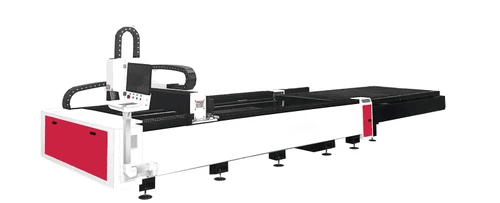
This is also why secondary components matter. If the same product family includes flat parts such as guards, mounting plates, or cabinet panels, it makes sense to evaluate flatbed laser cutting equipment alongside the tube workflow so the whole machine build stays coherent.
A Better Buyer Checklist
- Which agricultural tube parts create the most recurring assembly correction now?
- How often does batch variation increase sorting or staging difficulty?
- Which components affect later serviceability or maintenance access the most?
- Are flat parts and tubular parts part of the same production bottleneck?
- What level of setup and operator support is needed during the transition?
Why Support Still Matters After the Machine Arrives
In mixed agricultural production, a new workflow succeeds only when the plant stabilizes it quickly. Kiant's service support is therefore relevant because installation, training, and early operating discipline can determine whether the equipment actually improves the factory's daily rhythm. The contact team also becomes useful once the buyer is ready to compare real part families, batch size, and support expectations.
Conclusion
Agricultural machinery tube parts need more than a fast cutting step. They need a preparation workflow that can handle batch variation, support stable assembly, and respect the service-oriented nature of the finished equipment. Buyers who evaluate those factors together usually make stronger long-term decisions.